Table of Contents
- Introduction to Modernism
- Defining the International Style
- Cultural Context of Modernism
- Ideological Roots of Modernism
- Regional Responses to Modernism
- Critiques of the International Style
- The Legacy of Modernism
- Contemporary Movements Influenced by Modernism
- Conclusion: The Paradox of Modernism
Introduction to Modernism
Modernism emerged in the early 20th century as a compelling response to the constraints of traditional artistic and architectural styles. This movement sought to break free from the established norms and conventions that had dominated society for centuries. Central to modernism is the belief in progress and innovation, showcasing a deep commitment to experimentation, creativity, and the reevaluation of values that shaped cultural expressions.
At its core, modernism encompasses a wide array of artistic and literary practices that share an overarching aim: to reflect the rapidly changing realities of contemporary life. Artists, architects, and writers began to explore new forms and techniques, seeking to represent the complexities of the modern experience. The industrial revolution, urbanization, and technological advancements greatly influenced thinkers and creators of this period, which catalyzed a critical perspective toward the past and prompted the reimagining of art and design.
The principles of modernism can be delineated through its emphasis on simplicity, functionality, and a rejection of ornamentation. In architecture, celebrated examples like the International Style highlighted clean lines and open spaces, reflecting a move toward minimalism and the elimination of excess. Similarly, in literature and the arts, modernist works often demonstrated fragmentation, stream of consciousness, and a departure from traditional narrative structures, allowing for diverse interpretations and emotional depths.
However, the journey of modernism is often marked by its contradictions. While it aimed at universal truths and experiences, modernism also grappled with the realities of individual subjectivity. As such, this multifaceted movement warrants an in-depth exploration to fully appreciate its impact on culture and aesthetics, and to grasp the legacy it has left in the evolution of contemporary thought.
Defining the International Style
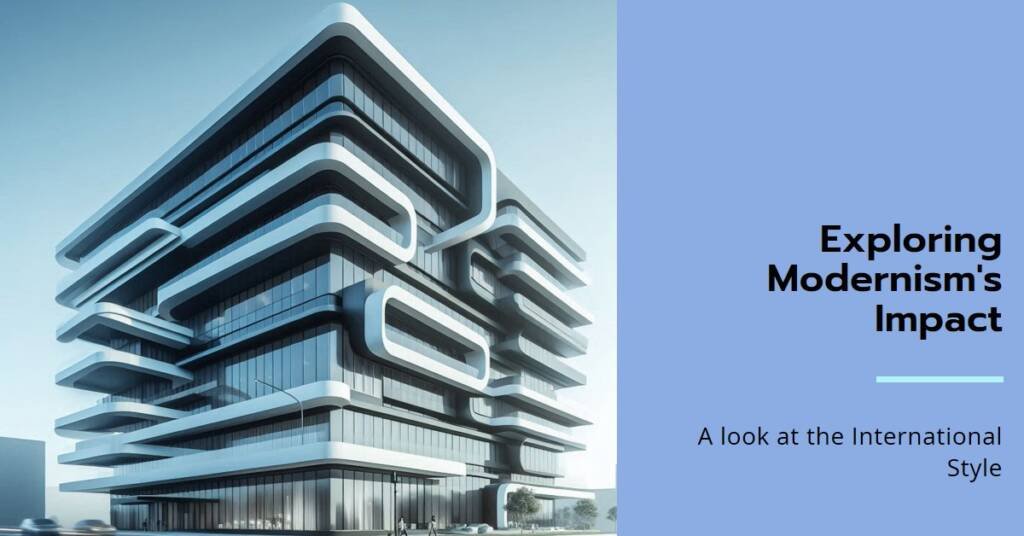
The International Style emerged as a distinct architectural movement in the early 20th century, characterized by its embrace of simplicity, functionalism, and a deliberate rejection of ornamentation. This style reflects a strong belief that design should prioritize function above all else, leading to structures that epitomize clarity and minimalism. The aesthetics of the International Style are marked by clean lines, geometric forms, and the innovative use of modern materials such as steel and glass, which contribute to a sense of openness and transparency in buildings.
Key figures associated with the International Style include renowned architects such as Le Corbusier and Mies van der Rohe. Le Corbusier, one of the most influential proponents, envisioned architecture as a tool for social improvement, believing that well-designed spaces could enhance the quality of life. His contributions include the design principles outlined in his “Five Points of Architecture,” which emphasize pilotis (supports), open floor plans, and horizontal windows. Mies van der Rohe, another leading architect of this movement, is best known for his phrase, “less is more,” encapsulating the essence of the International Style in his buildings, notably the Barcelona Pavilion and the Farnsworth House, which embody minimalist elegance.
Despite its aspirations for universality and a departure from historical styles, the International Style has faced criticism for its apparent lack of regional identity and cultural context. This critique highlights the potential alienation experienced in environments where these structures are situated. The stark, unadorned facades and functional forms can often appear austere, raising questions about the emotional resonance and connection such buildings foster with their surroundings. As an architectural approach aiming to transcend local customs and traditions, the International Style poses challenges as it seeks a balance between functionality and cultural narratives.
Cultural Context of Modernism
The period of modernism emerged against a backdrop of significant cultural transformations that fundamentally reshaped societies across the world. Industrialization, which gained momentum in the late 19th and early 20th centuries, was a defining aspect of this era. As industries expanded and factories proliferated, urban populations swelled as people migrated in search of employment. This rapid urbanization contributed to a shift in lifestyle, social structures, and cultural practices, giving rise to a new ethos encapsulated by modernist ideals.
In addition to industrialization, the aftermath of World War I played a crucial role in shaping modernist thought. The war resulted in unprecedented loss of life and disillusionment, leading many intellectuals and artists to question established norms and conventions. This questioning manifested itself within various forms of art and architecture as practitioners sought to reflect the complexities and challenges of the new reality. As a response to the trauma of the war, the modernist movement focused on innovation and experimentation, breaking away from traditional forms in favor of abstraction and minimalism.
During this tumultuous period, there was also a growing tension between universalism and local identity. Modernist proponents often advocated for a stylistic uniformity that transcended geographic and cultural boundaries, a quest for an international style in architecture and the arts. However, this universal approach was countered by a corresponding revival of interest in regional styles and vernacular forms, highlighting the importance of local identity amid an increasingly interconnected world. The interplay between these competing forces created a rich dialogue that ultimately informed the aesthetic and theoretical foundations of modernism.
Ideological Roots of Modernism
Modernism emerged as a multifaceted movement that transcended artistic expression, deeply intertwined with progressive political ideologies and aspirations for social reform. Rooted in the late 19th and early 20th centuries, modernism arose during a period marked by significant upheaval and transformation, encompassing the effects of industrialization, urbanization, and cultural shifts. This backdrop fostered a desire to challenge convention and embrace new ways of thinking that aimed to align art and architecture with contemporary social realities.
At its essence, modernism was not merely a reaction against traditional aesthetic values but also a reflection of a collective quest for social change. Influential ideologies, such as socialism and other progressive movements, shaped modernist thought, advocating for the empowerment of individuals and marginalized communities. The emphasis on social reform mirrored a profound belief that art could serve a crucial role in reshaping society, encouraging a shift towards a more equitable and just world.
Modernist artists and architects sought to embody the evolving aspirations of society through their work. They emphasized simplicity, functionality, and a break from ornamentation, believing that these qualities could express the essence of modern life. This approach also posed critical inquiries regarding the concept of progress itself and its implications for society. Questions about the direction of progress, the role of technology, and the impact of economic changes on individual lives became central to the modernist discourse, suggesting a tension between advancement and its potential societal consequences.
As modernism spread across various disciplines, from literature and visual arts to architecture, it became evident that its ideological roots were deeply connected to the ethos of innovation and reform. By engaging with these complex interrelations, modernism not only documented the shift in cultural paradigms but also actively participated in shaping the very future it envisioned. The engagement with progress through modernism has thus left an indelible mark on contemporary thought and artistic expression.
Regional Responses to Modernism
The advent of modernism and its embodiment in the International Style prompted diverse reactions across various regions, each shaped by distinct cultural, historical, and social contexts. In Latin America, architects embraced modernism not merely as a set of aesthetic principles but as a vehicle for reinforcing national identity. For instance, in Brazil, the work of Oscar Niemeyer and the design of Brasília exemplified a synthesis of modernist ideals and Brazilian cultural narratives. This approach facilitated the emergence of an architectural language that celebrated local materials and forms, effectively distancing itself from the purely functional aspects prevalent in European modernism.
Conversely, in Asia, modernism sparked both enthusiasm and skepticism. Countries such as Japan navigated the complexities of Western influence while honoring traditional aesthetics. Post-World War II, architects like Kenzo Tange integrated modernist concepts with local architectural heritage, leading to innovative structures that resonated with Japanese culture. The Hiroshima Peace Memorial Museum serves as an illustration of this delicate balance—where modernist form meets cultural storytelling, resulting in a poignant site of reflection and remembrance.
Africa’s response to modernism offers yet another dimension to this discourse. The continent’s architectural landscape during the post-colonial era was marked by a dialogue between modernist principles and indigenous building practices. In countries such as Tanzania, the work of architects like Habib Kayanga showcases an inventive use of modern materials and techniques while mirroring traditional forms and community needs. The outcome is a unique architectural expression that reflects both contemporary aspirations and cultural heritage, challenging the notion that modern architecture must conform to a singular international style.
These examples illustrate that modernism, while often thought of as a uniform movement, provoked a range of interpretations across different regions, leading to vibrant, region-specific adaptations that emphasize both modernity and cultural specificity.
Critiques of the International Style
The International Style, renowned for its minimalist aesthetic and functional design, has not escaped scrutiny from various architects, designers, and theorists over the decades. Critics argue that this architectural movement often conveys a sense of alienation and a disconnect from the cultural context in which it resides. Prominent figures like Louis Kahn and Robert Venturi have highlighted concerns about the style’s perceived coldness and lack of warmth, suggesting that spaces designed under this paradigm can feel uninviting and sterile. The emphasis on uniformity and standardization, while promoting efficiency, has led to environments that many perceive as devoid of personality and human scale.
Furthermore, the critique extends to the International Style’s approach to local traditions and contexts. Architects such as Hasan Fathy have argued that a successful architectural practice should engage with the historical and cultural nuances of its environment rather than impose a one-size-fits-all solution. Fathy emphasized the importance of materials and methods inherent to a region’s heritage, asserting that architecture should reflect local identities rather than erase them. This sentiment echoes the works of other critics who advocate for a more contextual approach to architectural design, which respects and enhances the local culture and conditions.
In academia, theorists like Peter Blake have also voiced concerns about the pervasive influence of the International Style, claiming that it often neglects the diverse aesthetic preferences of different communities around the world. By prioritizing functionality and the purity of form, architects have at times overlooked the subtleties that make local architecture unique. Such critiques foster an ongoing dialogue about the necessity of contextuality in architecture, urging a balance between modernist ideals and the rich tapestry of local architectural traditions.
The Legacy of Modernism
Modernism, often identified through its hallmark ethos of functionality and simplicity, has left an indelible mark on contemporary architecture and design. Emerging in the early 20th century, this movement sought to break away from traditional forms and explore new materials and techniques. Its principles, grounded in rationalism and innovation, have evolved yet remain prominent in the built environment. Architectural figures such as Le Corbusier and Mies van der Rohe emphasized open spaces and structural integrity, which continue to influence modern architects today.
The International Style, a subset of modernism characterized by its emphasis on volume over mass, minimal ornamentation, and an adherence to industrial materials, further cemented these principles within mainstream architecture. This global design approach facilitated the emergence of iconic structures, from skyscrapers in urban landscapes to minimalist homes in suburban areas. Buildings like the Seagram Building and the Villa Savoye epitomize how modernism merged aesthetics with functionality, serving as blueprints that architects reference today.
However, the legacy of modernism is not without controversy. As global dialogues around sustainability and cultural inclusivity gain traction, the relevance of modernism is frequently questioned. Critics argue that its mechanistic approach often disregarded local contexts and human-centered design. Consequently, many contemporary architects are rediscovering and reinterpreting modernism, seeking to integrate its principles with sustainable practices and regional characteristics, thereby creating hybrid designs that respect local cultures while promoting modernity. The ongoing debates surrounding modernism’s legacy highlight the movement’s complexity and its adaptability to modern challenges.
In conclusion, while modernism and the International Style have profoundly influenced contemporary architecture and design, their legacy continues to evolve. As architects draw upon these foundational principles, they also navigate the pressing concerns of today’s globalized world, reaffirming the movement’s lasting impact.
Contemporary Movements Influenced by Modernism
The architectural landscape of the contemporary era has been profoundly shaped by the principles rooted in modernism, with various movements reflecting its core tenets while adapting to the evolving needs of society. Three prominent trends that have emerged, deeply influenced by modernist ideology, are Minimalism, Brutalism, and Sustainable Design. Each of these movements has revisited modernist concepts, serving as a bridge between the past and present in architectural practice.
Minimalism, characterized by simplicity and an emphasis on functionality, draws directly from the modernist principle of “form follows function.” This design philosophy prioritizes uncluttered spaces and essential elements, often utilizing limited color palettes and materials. Architects and designers within this movement aim to create environments that foster clarity and calm, enabling occupants to connect more profoundly with their surroundings. This minimalist approach has been instrumental in addressing the complexities of modern living by offering adaptable, versatile spaces for users.
Conversely, Brutalism has garnered both admiration and criticism; stemming from the modernist era, it is known for its raw concrete finishes and geometric forms. Brutalist architecture evokes a sense of solidity and permanence, often making bold statements about social responsibility and public engagement. Contemporary architects are revisiting Brutalism, applying it to social housing, educational institutions, and cultural venues, creating structures that serve the community while embracing an aesthetic that challenges conventional beauty standards.
Sustainable Design, increasingly significant in today’s context, reinvigorates modernist ideals by emphasizing harmony between the built environment and nature. By integrating energy-efficient materials and designs, contemporary architects pay homage to modernism’s vision of functionality while cultivating a more conscientious approach to environmental impacts. The focus on sustainability aligns with the modernist pursuit of progress, demonstrating that adaptive architectural practices can meet societal needs while remaining environmentally responsible.
Conclusion: The Paradox of Modernism
The exploration of modernism reveals a complex interplay between artistic expression and cultural identity. The International Style, often viewed as the epitome of modernist architecture, sought to create a universal language of design devoid of cultural specificity. This ambition, however, has unearthed intriguing paradoxes. While striving for a homogeneous approach in architecture and design, practitioners inadvertently grounded their work in the distinct cultural contexts from which they emerged. This reflects a fundamental tension inherent in the modernist movement: the quest for universality versus the embrace of cultural particularity.
Indeed, the International Style showcases an architectural language that transcends geographical boundaries, yet its realization often bears the marks of local traditions and materials. Each structure encapsulates a dialogue between modernist aspirations and the unique attributes of its site. This phenomenon raises compelling questions about the essence of modernism: Can a style truly be universal if it is inextricably linked to the local cultures it originates from? The divergences in interpretation and application present avenues for further investigation into how modernism has adapted and evolved across various contexts.
As we consider the legacy of modernism, it is pertinent to reflect on how its principles shape contemporary architectural practices and cultural dialogues. Modernist ideals continue to influence current trends, challenging architects and designers to reconcile innovation with historical context. This interplay invites us to rethink our understanding of modernism, urging a broader discourse on how cultural narratives inform aesthetic choices. The lessons drawn from modernism can foster an appreciation for regional identities, even within a global framework. Ultimately, acknowledging this paradox not only enriches our understanding of modernism but also opens pathways for future exploration in both architecture and culture.