Table of Contents
Our cities are forests of concrete and steel, monuments to human ingenuity. But they are built on a fragile foundation: the linear model of take, make, and waste. The construction industry is one of the world’s largest consumers of raw materials and a massive contributor to CO2 emissions and landfill waste. Every demolished building becomes a tomb of valuable resources, lost forever.
But what if we could change the blueprint? What if our buildings could become part of a living, breathing cycle—designed not for an end-of-life, but for an infinite loop of use, reuse, and regeneration?
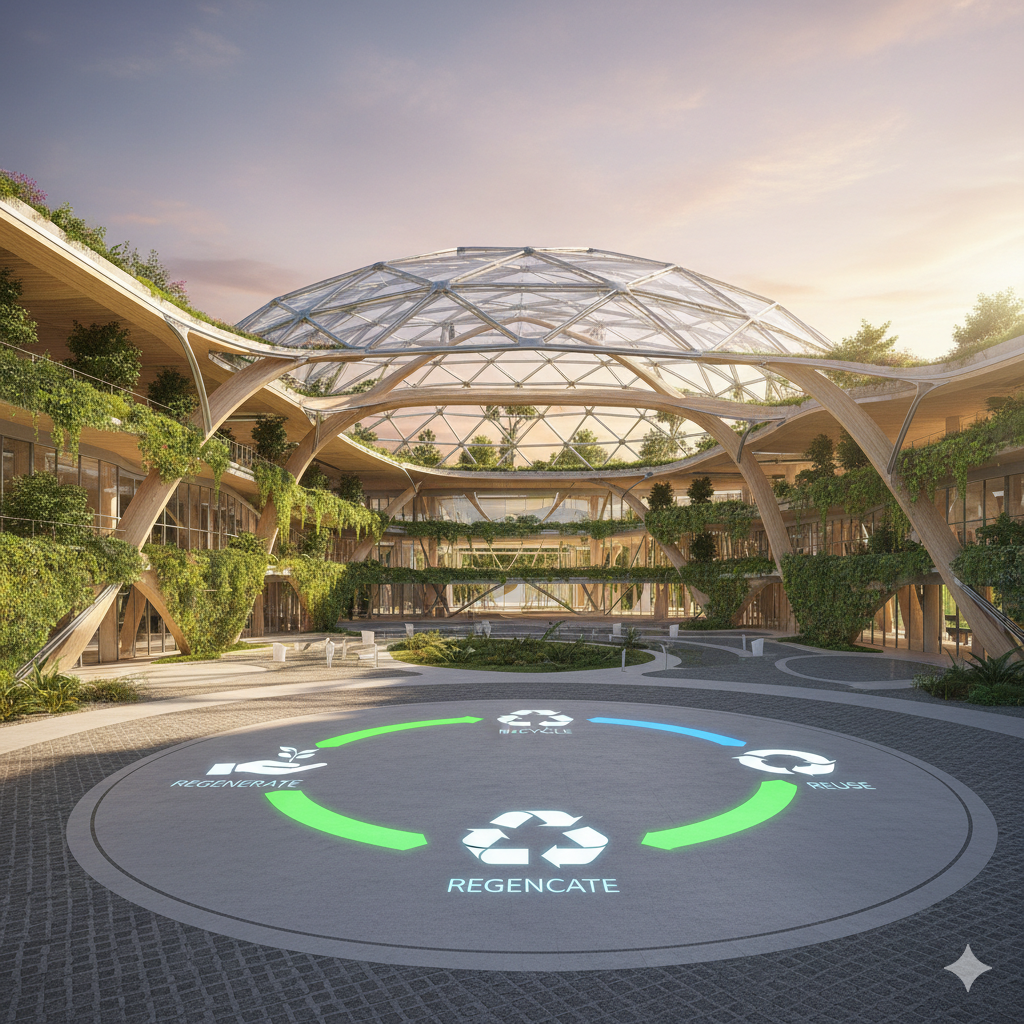
This is the promise of the circular economy in architecture. It’s a radical rethinking of how we design, build, and live. It’s not just about adding solar panels or using recycled materials; it’s a fundamental shift towards a zero-waste design philosophy that eliminates waste, circulates materials, and actively heals our planet. This guide will walk you through the core principles, groundbreaking strategies, and inspiring examples of this architectural revolution.
The Problem with the Straight Line: Linear vs. Circular Economy
For centuries, our economy has operated on a straight line. We extract resources, manufacture products, use them, and then discard them. In construction, this looks like:
- Take: Quarrying stone, mining metals, felling trees.
- Make: Processing materials and constructing a building.
- Waste: Demolishing the building at the end of its life and sending tons of debris to the landfill.
The consequences are staggering. The building sector is responsible for nearly 40% of global energy-related CO2 emissions and consumes about 50% of all extracted materials. This linear path is a dead end.
The circular economy in architecture bends this line into a circle. It’s an economic and design model inspired by nature’s own zero-waste systems. The core idea is to keep materials and products in use for as long as possible, extracting their maximum value before recovering and regenerating them at the end of their service life. The goal is simple but profound: to design out waste from the very beginning.
The 5 Pillars of Zero-Waste Design in Architecture
Implementing a circular economy in architecture requires a multi-faceted approach. It’s a new mindset for architects, engineers, builders, and clients. Here are the five foundational pillars that can guide any project towards a zero-waste future.
Pillar 1: Design for Disassembly (DfD) – Building for a Second Life
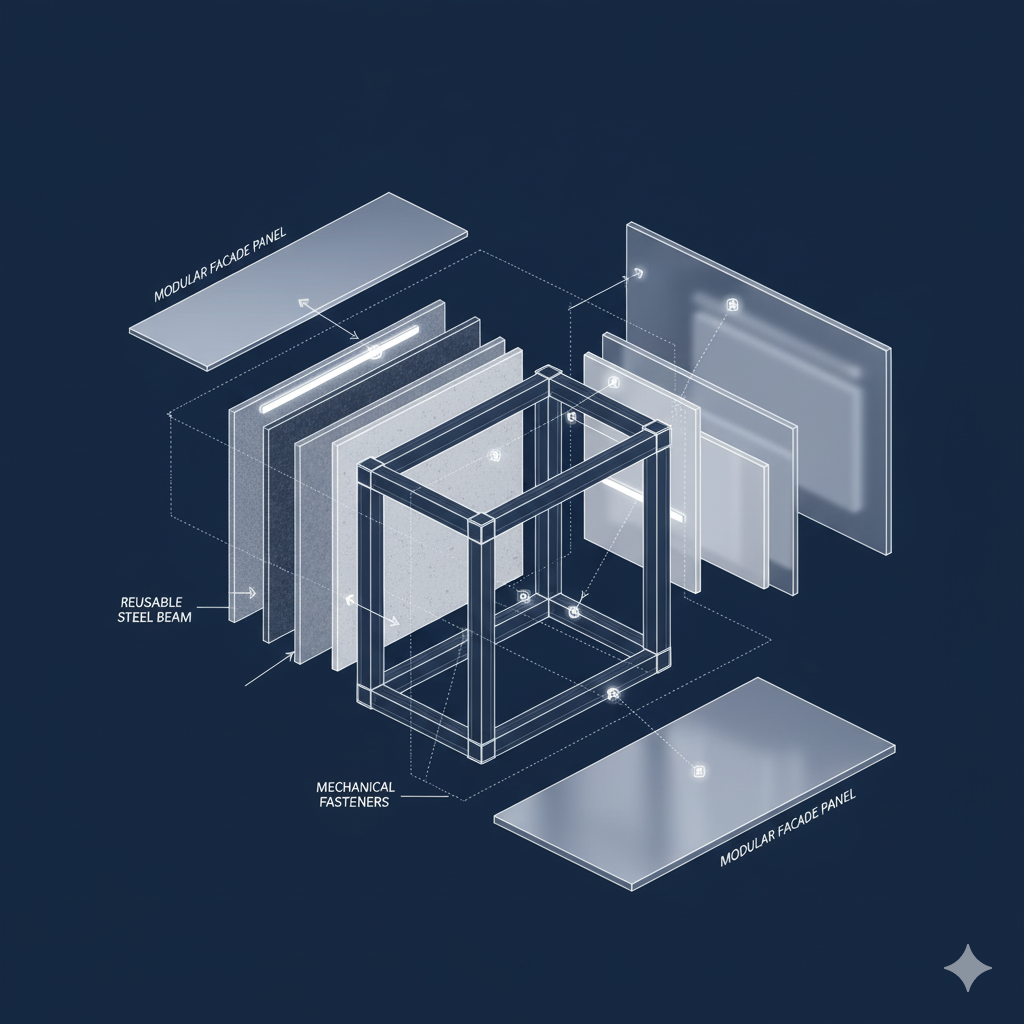
Imagine a building constructed like a set of LEGOs rather than a permanently glued sculpture. That’s the essence of Design for Disassembly (DfD). Instead of designing buildings for demolition, we design them to be easily taken apart, allowing their components to be recovered, reused, or recycled with minimal effort and maximum value.
This is a critical departure from traditional construction methods that rely on irreversible connections like chemical adhesives, mortar, and poured concrete. DfD prioritizes:
- Mechanical Fasteners: Using bolts, screws, and clips instead of glues and welds. This allows structural elements, facade panels, and interior finishes to be removed intact.
- Material Passports: Creating a detailed digital inventory of every material and component in the building. This “passport” includes information on the material’s composition, origin, recycling potential, and disassembly instructions. It turns the building into a future “material bank.”
- Standardization and Modularity: Using standardized component sizes and modular construction methods simplifies both initial assembly and future disassembly.
By embracing DfD, we ensure that the steel beams, glass panels, and wooden floors of today’s buildings become the raw materials for the buildings of tomorrow. This is a core tenet of the circular economy in architecture.
Pillar 2: The Right Stuff – Choosing Sustainable and Circular Materials
A building is only as sustainable as the materials it’s made from. A true zero-waste design approach scrutinizes every material choice, prioritizing those that are renewable, recycled, or inherently non-toxic.
Key considerations for sustainable building materials include:
- Reclaimed and Salvaged Materials: Giving a second life to materials from demolished buildings is the ultimate form of recycling. Think reclaimed timber beams with a rich patina, salvaged bricks that tell a story, or repurposed steel structures.
- Recycled Content: Opting for materials with high recycled content, such as recycled steel (which can be infinitely recycled without loss of quality), recycled concrete aggregate, insulation made from recycled plastic or denim, and flooring made from recycled rubber.
- Biomaterials and Renewables: Exploring innovative, nature-based materials that are biodegradable or can be grown. Examples include:
- Mass Timber: Cross-laminated timber (CLT) and glulam are strong, lightweight alternatives to steel and concrete that sequester carbon.
- Hempcrete: A mix of hemp hurds and lime, it’s a fantastic insulator that is carbon-negative.
- Mycelium: The root structure of fungi can be grown into bricks and insulation panels that are fire-resistant and fully compostable.
- Cork: A renewable, harvested bark that serves as excellent insulation and cladding.
- Cradle-to-Cradle Design Certification: Look for materials certified by the Cradle to Cradle Products Innovation Institute. Cradle-to-cradle design ensures that a product is designed to be safely returned to either the biological cycle (composted) or the technical cycle (recycled into a new high-quality product).
The circular economy in architecture demands a deep understanding of the lifecycle of materials, moving away from “cheap and disposable” towards “durable and valuable.”
Pillar 3: Adaptive Reuse – The Greenest Building is the One Already Standing
Before we even think about building new, the circular economy asks a crucial question: can we use what’s already there? Adaptive reuse is the process of retrofitting and repurposing existing buildings for new uses, rather than demolishing them.
This approach is profoundly sustainable for several reasons:
- Embodied Carbon: A huge amount of carbon is emitted during the manufacturing and transportation of new building materials. By preserving the existing structure and shell of a building, we save all of that “embodied carbon.”
- Waste Reduction: Demolition creates mountains of waste. Adaptive reuse avoids this entirely.
- Cultural Preservation: Old buildings connect us to our history and give our cities character. Repurposing an old warehouse into apartments or a historic church into a community arts center preserves this cultural fabric.
Successful adaptive reuse projects showcase how creative constraints can lead to beautiful and unique architectural solutions. It is perhaps the most powerful and immediate application of the circular economy in architecture.
Pillar 4: Design Out Waste – Smart Planning for Maximum Efficiency
Waste isn’t just created at the end of a building’s life; it’s generated at every stage, especially during construction. A key principle of zero-waste design is to eliminate waste before it’s even created through intelligent planning and construction methods.
- Building Information Modeling (BIM): BIM software allows architects and engineers to create a precise digital twin of a building before construction begins. This model can be used to optimize material quantities, identify potential clashes, and plan construction sequencing, drastically reducing offcuts and on-site errors.
- Prefabrication and Modular Construction: Building components or entire modules in a controlled factory setting significantly reduces waste compared to on-site construction. Cuts are more precise, excess materials can be immediately recycled, and weather-related damage is eliminated.
- Lean Construction Principles: This philosophy, borrowed from manufacturing, focuses on maximizing value and minimizing waste. It involves careful planning, just-in-time delivery of materials, and empowering on-site teams to continuously improve processes.
By focusing on efficiency from day one, we can make the construction process itself a model of the circular economy in architecture.
Pillar 5: Regenerative Architecture – Designing for a Positive Impact
The ultimate goal of the circular economy is not just to do less harm, but to actively do good. Regenerative architecture designs buildings as positive contributors to their local ecosystems and communities. Instead of just being passive shelters, they become active systems that heal and restore.
This exciting field includes strategies like:
- Living Buildings: Designing structures that generate more energy than they consume, treat their own wastewater, and are built with non-toxic, locally sourced materials.
- Green Roofs and Living Walls: These features help manage stormwater, reduce the urban heat island effect, improve air quality, and create habitats for biodiversity.
- Biophilic Design: Integrating nature directly into the building through natural light, ventilation, interior gardens, and natural materials to improve the health and well-being of occupants.
- Water Positivity: Implementing advanced rainwater harvesting and greywater recycling systems that allow a building to collect and treat enough water for its needs, reducing strain on municipal systems.
Regenerative architecture is the highest expression of the circular economy in architecture, where our buildings become a force for ecological and social good.

Challenges and the Road Ahead
Transitioning to a fully circular model in construction is not without its hurdles. Challenges include developing new supply chains for reclaimed materials, changing deep-rooted industry habits, updating building codes, and addressing the perception of higher upfront costs.
However, the momentum is undeniable. Innovations in material science, digital technology like BIM, and a growing demand from clients for sustainable buildings are paving the way. Governments are beginning to implement policies that favor circularity, and pioneering architects are proving that the circular economy in architecture is not only possible but also profitable and beautiful.
By embracing these principles, we can move from an age of consumption to an era of stewardship. We can build cities that are not just sustainable, but truly regenerative—places that enrich the planet and the people who inhabit them for generations to come. The future is not about building more; it’s about building smarter. The future is circular.

Is building with circular economy principles more expensive?
While some sustainable materials or technologies may have a higher initial cost, a circular approach often leads to significant long-term savings. Designing for disassembly increases the building’s future value as a material bank. Energy-efficient and regenerative designs reduce operational costs for heating, cooling, and water. Furthermore, prefabrication and waste reduction during construction can lower initial project costs.
What is a “material passport” in architecture?
A material passport is a digital document that contains detailed information about all the materials and components within a building. It records what they are made of, where they came from, how they are assembled, and their potential for reuse or recycling. It’s a key tool for the circular economy in architecture because it ensures future generations know the value and potential of the building’s components.
How can an individual homeowner apply circular principles?
Even on a small scale, you can make a difference. When renovating, prioritize deconstruction over demolition to salvage materials like wood flooring, doors, and fixtures. Choose durable, non-toxic materials with high recycled content. Consider designs that are flexible and can adapt to your family’s changing needs over time, reducing the need for future major renovations.
What’s the difference between green architecture and circular architecture?
Green architecture primarily focuses on reducing the negative environmental impact of buildings, mainly through energy efficiency and resource conservation (doing less harm). The circular economy in architecture is an evolution of this concept. It includes all the goals of green architecture but goes further by focusing on eliminating the concept of waste entirely and creating systems that are regenerative (actively doing good).