


Table of Contents
We live in an era of “Ocularcentrism”—the privileging of vision over all other senses. In the age of Instagram and Pinterest, architecture is often reduced to a flat image on a glowing screen. We judge a building by how “photogenic” it is.
But we do not live in photographs. We live in bodies.
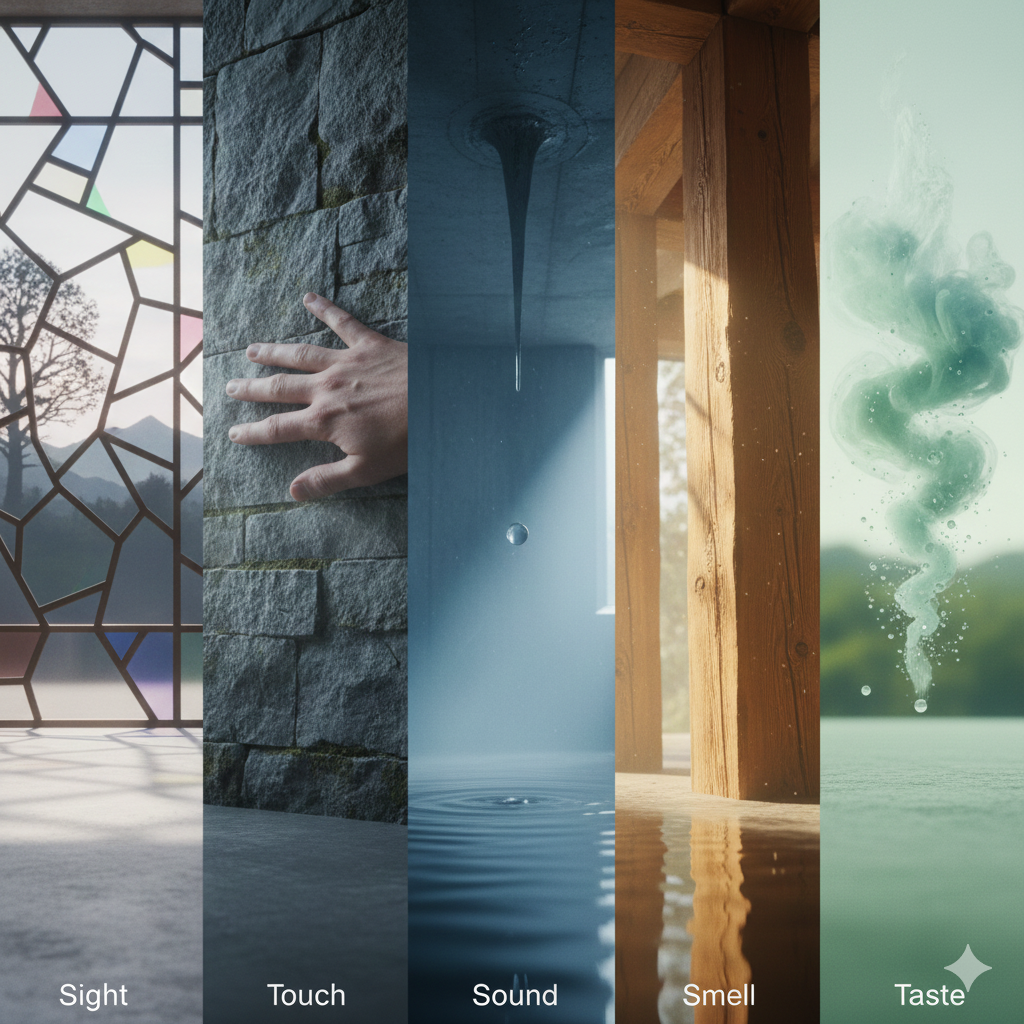
Sensory Architecture is a rebellion against the tyranny of the visual. It is a philosophy, rooted in phenomenology (the study of consciousness and experience), that argues a building must be felt, heard, and smelled to be truly understood. As the famous architect Juhani Pallasmaa wrote in The Eyes of the Skin: “The hands want to see, the eyes want to caress.”
When we ignore the other senses, our buildings become sterile and distant. When we engage them, our buildings become memorable and emotional.
In this deep dive, we will explore how to design for the full human sensorium, moving beyond the retina to create spaces that touch us back.
1. Sight: Beyond the Surface
Even within the visual realm, Sensory Architecture demands more than just prettiness. It demands depth.
- Shadow and Darkness: Modern lighting floods every corner with uniform brightness. Sensory design embraces shadow to create mystery and depth (chiaroscuro). It recognizes that the pupil needs to dilate to relax.
- Peripheral Vision: We focus too much on the “focused view.” Sensory design considers what is happening in the corner of your eye—the movement of leaves, the flicker of a fire—which grounds us in space.
2. Touch (Haptics): The Eyes of the Skin
Touch is the only sense that verifies reality. You can see a mirage, but you cannot touch one.
- Materiality: If a door handle looks like metal but feels like cheap plastic, the illusion of quality is broken instantly. Sensory Architecture prioritizes “truth to materials.” Wood should feel warm; stone should feel cool; steel should feel rigid.
- Temperature: We perceive thermal changes as a form of touch. Walking from a cool, stone-floored corridor into a sun-drenched, carpeted room creates a physical “threshold” that the body remembers.
- Weight: The heaviness of a door or the solidity of a handrail communicates security.

3. Sound (Auditory): The Shape of Silence
We have covered acoustic comfort technically in other posts, but in Sensory Architecture, sound is about mood.
- The Sound of Materials: Every material sings. Walking on gravel sounds different than walking on timber. An architect can “choreograph” the sound of footsteps to slow people down (gravel) or speed them up (concrete).
- Reverberation as Atmosphere: A cathedral feels holy because of its long echo (5+ seconds). A bedroom feels intimate because of its dead silence. Designing the “reverb time” is designing the emotion of the space.
- Water: The sound of running water is a universal calmative. It masks traffic noise and connects us to a primal sense of freshwater survival.
4. Smell (Olfactory): The Memory Trigger
Smell is the sense most directly wired to the brain’s memory center (the hippocampus). A specific scent can transport you back to your childhood home instantly.
- Scenting Materials: Instead of using artificial air fresheners, Sensory Architecture uses building materials that off-gas pleasant, natural scents.
- Cedar and Pine: For a fresh, forest-like aroma.
- Beeswax: For treating wood floors.
- Tatami Mats: For an earthy, grassy scent.
- Ventilation Paths: Designing airflow to pull scents from a garden (jasmine, rosemary) into the living space during specific seasons.
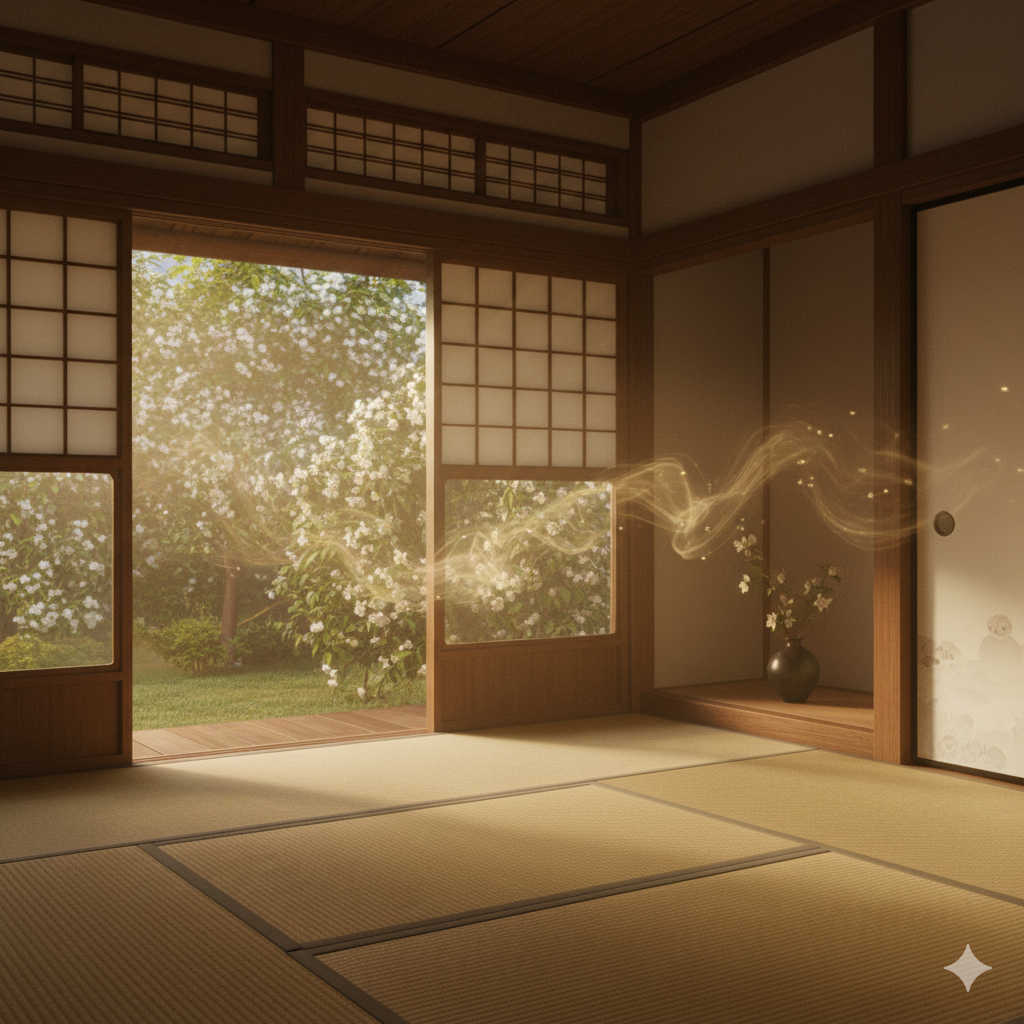
A Japanese interior illustrating olfactory design, where natural scents from the garden are integrated into the architecture.
5. Taste (Gustatory): Tasting the Air
Taste in architecture? It sounds abstract, but the senses of smell and taste are linked.
- Synesthesia: We “taste” the air quality. A room that is stuffy and dusty tastes “metallic” or “dry.” A room near the ocean tastes “saline.”
- The Dining Experience: Architecture profoundly affects how food tastes. Studies show that loud noise suppresses the sensation of sweetness (making airline food taste bad). Designing dining spaces with warm light and soft acoustics actually makes the food taste better.+1
Case Study: The Therme Vals (Peter Zumthor)
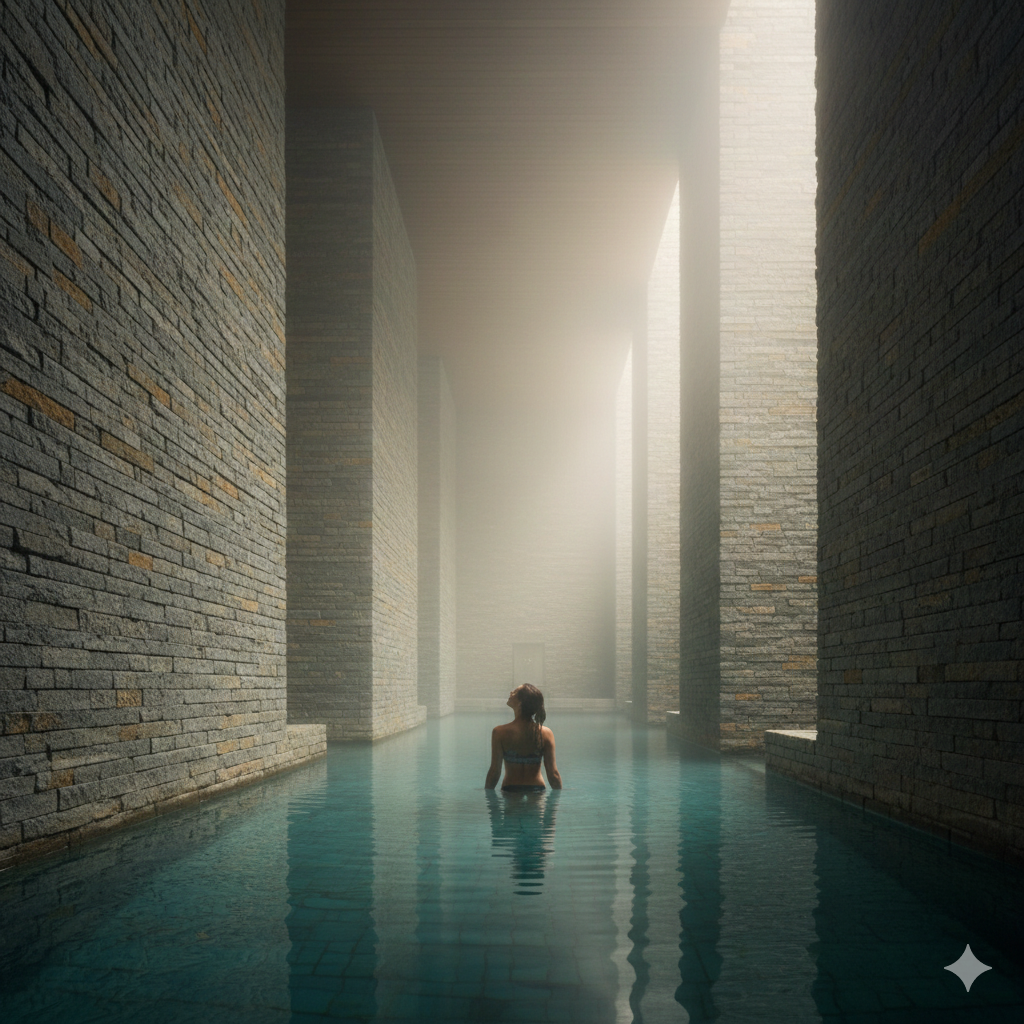
The masterpiece of Sensory Architecture is Peter Zumthor’s thermal baths in Switzerland.
- Sight: Dark, moody, cavernous spaces lit by cracks of light.
- Touch: Constructed of local quartzite slabs that are layered. You move between water of different temperatures (Fire Bath vs. Ice Bath).
- Sound: The water echoes against the stone, creating a slow, meditative rhythm.
- Smell: The scent of damp stone and minerals.
- The Result: It is not just a building; it is a total bodily immersion.
Conclusion
Designing for the five senses is designing for the human soul. It requires the architect to close their eyes and imagine the space not as a drawing, but as an experience.
When we engage the senses, we anchor the user in the present moment. We stop them from doom-scrolling and force them to feel the coolness of the brass rail, smell the cedar beams, and hear the rain on the tin roof.
Sensory Architecture turns a building into a memory.
Frequently Asked Questions (FAQ)
Why is modern architecture often criticized as “cold”?
Because it often relies on glass, steel, and concrete—materials that are visually sleek (smooth) but haptically cold and acoustically reflective. They lack “texture” and “warmth” for the touch and ear.
Can Sensory Architecture be applied to office design?
Yes. Introducing texture (wood desks), varied acoustics (quiet zones), and biophilic scents (citrus/mint) can reduce stress and increase focus, breaking the monotony of the “grey box” office.
Who is Juhani Pallasmaa?
He is a Finnish architect and theorist whose book, The Eyes of the Skin, is the foundational text of Sensory Architecture. He argues against the dominance of vision in design.
How does smell affect real estate sales?
Profoundly. This is why realtors bake cookies before an open house. A “home” scent triggers an emotional desire to buy, while a musty or chemical smell triggers a flight response.
Is Sensory Architecture expensive?
It doesn’t have to be. It is about selection. Choosing a rough-sawn wood plank costs the same as a smooth one, but the sensory experience is totally different. It requires thought, not necessarily more money.

