Table of Contents
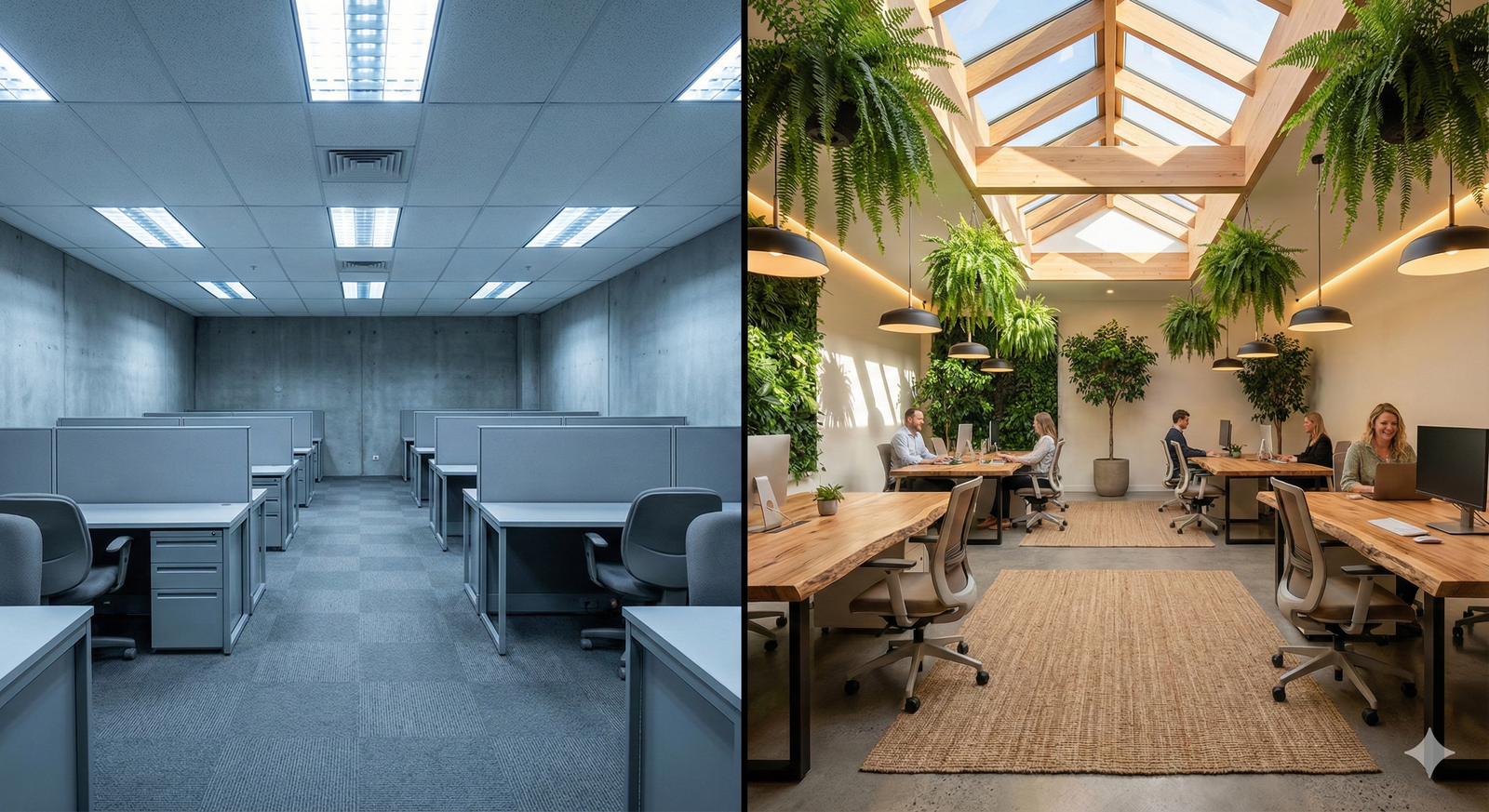
We are an indoor species. It is a startling fact, but the average human today spends 90% of their life indoors. We wake up in a box, drive in a box, work in a box, and then return to a box to sleep. For thousands of years, our biology was tuned to the rhythms of the sun, the texture of leaves, and the sound of running water. Today, it is tuned to the hum of the HVAC system and the glare of a fluorescent tube.
This disconnect is not just an aesthetic problem; it is a physiological crisis. It is linked to rising stress, anxiety, and a decline in cognitive function. But there is a cure, and it doesn’t come in a pill bottle. It comes in the form of Biophilic Design.
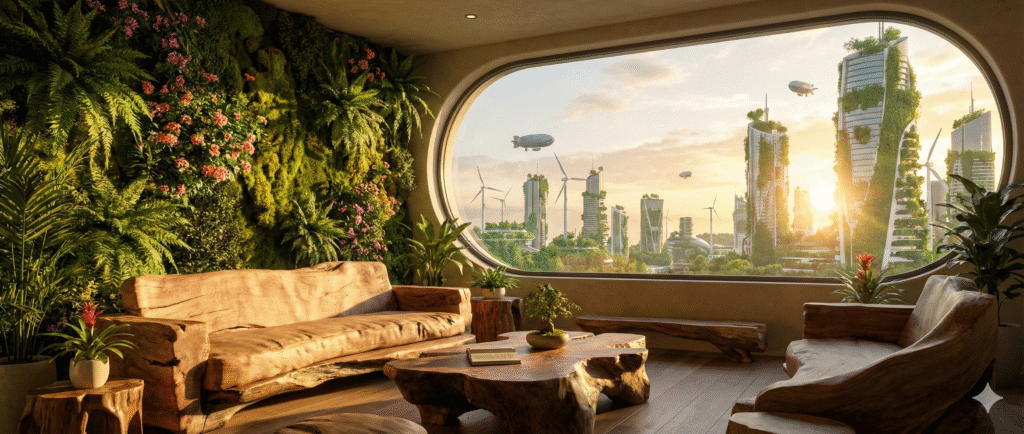
Biophilic Design is more than just putting a potted plant in the corner of an office. It is a rigorous, science-backed approach to architecture and interior design that seeks to reconnect humans with nature in the built environment. It is about replicating the experiences of the natural world—the “prospect and refuge” of a savannah, the dappled light of a forest canopy—inside our modern structures.
In this deep dive, we will explore the roots of this movement, the 14 patterns that define it, and how you can use Biophilic Design to create spaces that don’t just house people, but heal them.
The Science: Why We Crave Nature
The term “Biophilia” was popularized by the legendary biologist E.O. Wilson in 1984. He defined it as the “innate tendency to focus on life and lifelike processes.” Simply put: our brains are hardwired to love nature because, for 99% of human history, loving nature meant survival. Finding water, identifying fertile land, and seeking shelter in caves were matters of life and death.
When we enter a sterile, windowless room, our ancient brain signals “danger” or “scarcity,” triggering a low-level stress response. Conversely, when we see greenery or hear water, our parasympathetic nervous system kicks in, lowering cortisol levels and heart rate.
Biophilic Design is the engineering of this biological response. It is the practice of tricking the ancient brain into feeling safe and restored, even when we are forty floors up in a concrete jungle.
The Framework: The 14 Patterns of Biophilic Design
You cannot simply “add nature” and hope for the best. To do this right, professionals rely on the framework developed by Terrapin Bright Green, known as the 14 Patterns of Biophilic Design. These are grouped into three categories.
1. Nature in the Space (Direct Experience)
This is the most obvious category. It involves the direct presence of nature.
- Visual Connection: Viewing trees, water, or landscapes.
- Non-Visual Connection: Hearing birds, smelling flowers, or feeling airflow.
- Thermal & Airflow Variability: The subtle changes in temperature that mimic a breeze, rather than the stagnant “dead air” of most offices.
- Presence of Water: Seeing, hearing, or touching water.
- Dynamic & Diffuse Light: Lighting that changes intensity and color throughout the day (Circadian rhythms).
2. Natural Analogues (Indirect Experience)
This is where Biophilic Design gets creative. It’s about mimicking nature with non-living materials.
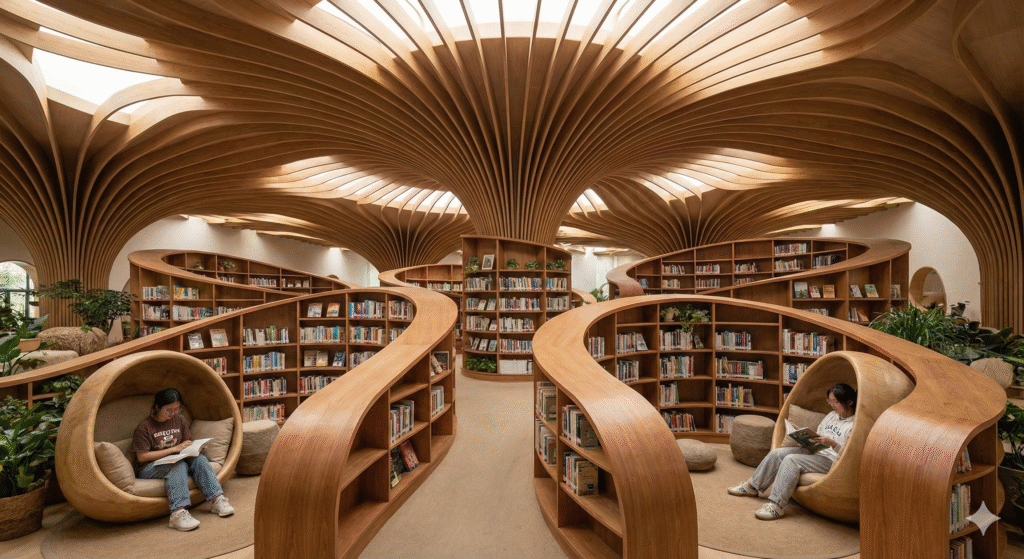
- Biomorphic Forms & Patterns: Using curves, honeycombs, or fractals (like the pattern of a fern leaf) in carpets or wallpaper. Nature rarely builds in straight lines or right angles.
- Material Connection: Using wood, stone, bamboo, or leather that has been minimally processed to show its natural grain and texture.
- Complexity & Order: Designs that are detailed but not chaotic—like the structure of a snowflake.
3. Nature of the Space (Spatial Experience)
This deals with how the room is organized.
- Prospect: An unimpeded view over a distance (the feeling of looking out from a hill). This creates a sense of planning and opportunity.
- Refuge: A protected spot where you feel safe (a high-backed chair, a reading nook).
- Mystery: Partially obscured views that entice you to explore deeper into the building.
- Risk/Peril: A thrilling threat with a reliable safeguard (like a glass-bottomed bridge).
The ROI: Health, Wealth, and Wisdom
Why are companies like Amazon, Google, and Apple spending billions on Biophilic Design? Because it pays off.
Productivity and Focus
Studies have shown that employees in offices with natural elements report a 15% increase in well-being and are 6% more productive. When you remove the low-level stress of a sterile environment, the brain has more energy for deep work and creativity.
Healing Rates
In healthcare, the impact is even more profound. A landmark study by Roger Ulrich found that patients recovering from surgery who had a view of trees required less pain medication and were discharged faster than those who stared at a brick wall. Biophilic Design is now a standard in modern hospital architecture.
Retail Sales
In retail environments, customers judge businesses surrounded by nature as “higher value” and are willing to pay up to 25% more for goods in greened environments. They also linger longer in the store.
Implementing Biophilic Design: From Home to High-Rise
You don’t need a billion-dollar budget to apply these principles. Here is how you can integrate Biophilic Design at any scale.
At Home (DIY Biophilia)
- Follow the Light: Arrange your furniture to maximize exposure to window light. Create a “morning spot” where you can drink coffee in direct sunlight to reset your circadian clock.
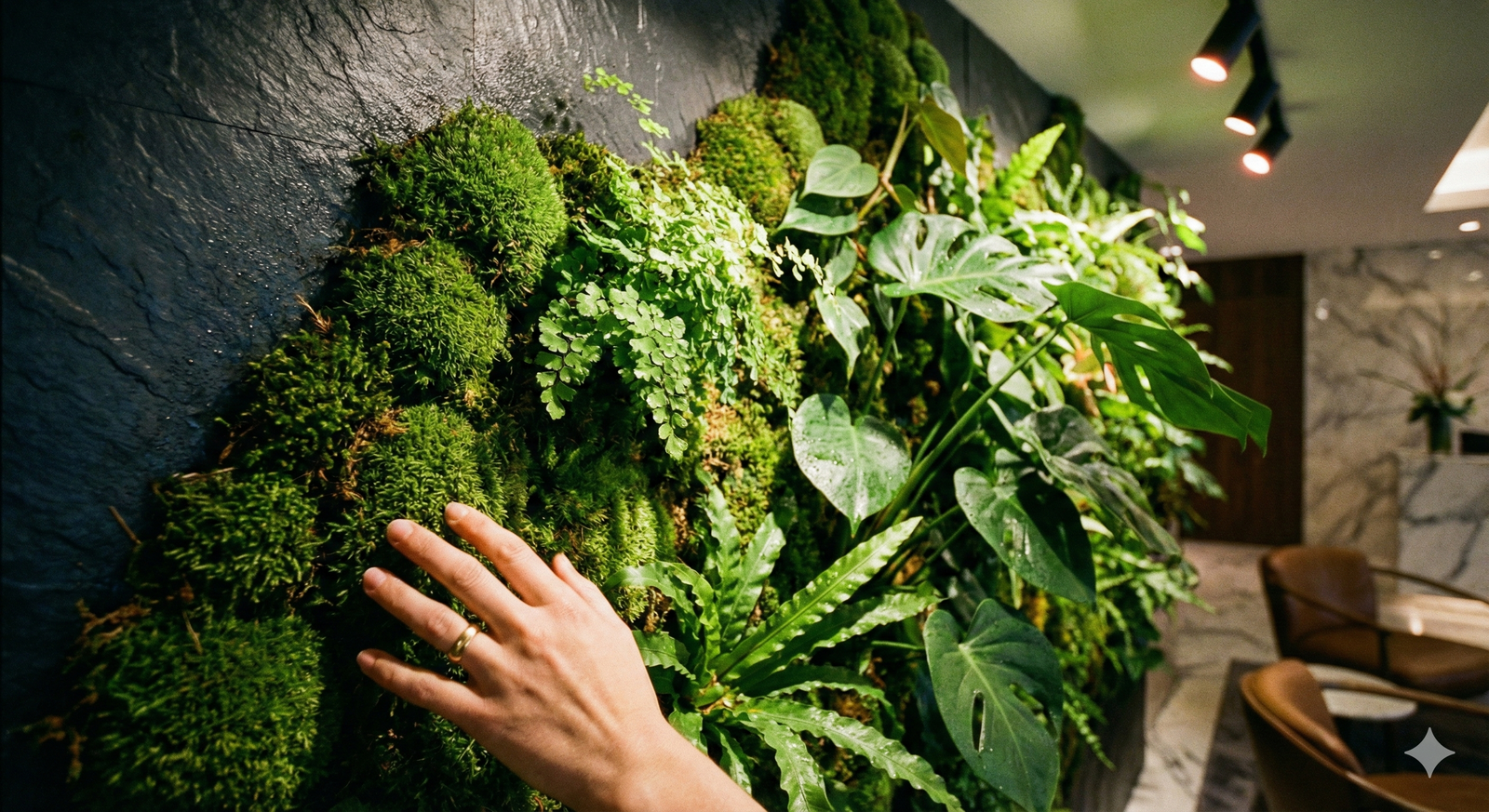
- Texture Over Color: When buying furniture, choose raw wood, linen, wool, or stone. Avoid glossy plastics. Your fingers should be able to “read” the material.
- ** The Rule of Three:** Group plants in threes. Use different heights and leaf textures (e.g., a tall Snake Plant, a trailing Pothos, and a bushy Fern) to create “Complexity and Order.”
At the Office
- Circadian Lighting Systems: Install smart LEDs that shift from cool blue light (focus) in the morning to warm amber light (relax) in the evening. This helps regulate employee sleep cycles.
- Soundscaping: Use white noise machines that play subtle nature sounds—wind through grass or a distant stream—to mask distracting conversations and lower stress.
- The “Refuge” Pod: Create small, enclosed booths with soft acoustic materials where employees can escape the “open plan” noise for deep work.
Real-World Case Studies
The Amazon Spheres (Seattle, USA)
Perhaps the most famous example of Biophilic Design in the modern workplace. The Spheres are three massive glass domes housing 40,000 plants from 30 distinct countries. It is not a greenhouse; it is a workspace. Meeting rooms are “bird’s nests” suspended in trees. Amazon built this because they recognized that urban employees were “nature-starved.”
Jewel Changi Airport (Singapore)
Airports are typically the most stressful places on earth. Singapore flipped the script. Jewel features the “Rain Vortex,” the world’s tallest indoor waterfall, surrounded by a four-story terraced forest. It uses Biophilic Design (Sound of water, Presence of water, Visual connection) to turn a transit hub into a calming destination.
Khoo Teck Puat Hospital (Singapore)
Designed as a “hospital in a garden,” this facility opens its corridors to the tropical breeze and overlooks a massive lake. The result? It has become a community hub where healthy people go just to hang out, destigmatizing the hospital environment.
The Future: Neuroarchitecture
As we move forward, Biophilic Design is merging with neuroscience to form “Neuroarchitecture.”
We will soon have buildings equipped with sensors that measure the occupants’ stress levels (via heart rate variability or facial recognition) and automatically adjust the environment. Imagine a room that detects you are stressed and automatically dims the lights, lowers the temperature, and projects a digital forest onto the walls.
We are also seeing the rise of “Algae Facades”—buildings that use living algae in their glass panels to generate energy and shade the interior, creating a structure that is literally alive.
Conclusion
Biophilic Design is not a luxury trend for high-end tech companies; it is a fundamental necessity for a species that is rapidly urbanization. We cannot stop building cities, but we can stop building dead cities.
By inviting nature back into our daily lives—through light, material, and vegetation—we can create spaces that respect our evolutionary heritage. We can build homes that help us sleep, offices that help us think, and hospitals that help us heal.
The future of architecture is not grey; it is green. And it starts with the realization that we are not separate from nature; we are nature.


Frequently Asked Questions (FAQ)
Is Biophilic Design just about adding plants?
No. While plants are a part of it (“Nature in the Space”), Biophilic Design is much broader. It includes natural lighting, ventilation, the use of natural materials (wood/stone), organic shapes, and spatial organization that mimics natural landscapes (like having a view).
Does Biophilic Design cost more?
It can have a higher upfront cost due to premium materials (wood vs. plastic) or complex systems (living walls). However, the lifecycle cost is often lower due to energy savings (daylighting) and the massive financial gains from increased employee productivity and retention.
Can Biophilic Design be applied to windowless rooms?
Yes. You can use “Natural Analogues.” Use high-quality circadian lighting to mimic the sun, install “virtual windows” (screens showing nature loops), use nature-inspired wallpapers, and incorporate textured materials like cork or unpolished stone to stimulate the sense of touch.
What is the “Savannah Hypothesis” in design?
It is the theory that humans prefer environments that resemble the African savannah where we evolved: open grassy spaces (prospect) dotted with clumps of trees for safety (refuge), and a source of water. Biophilic Design often tries to replicate this spatial balance.
Are there certifications for Biophilic Design?
Yes. The WELL Building Standard and the Living Building Challenge both have heavy focuses on biophilic elements. There is also specific guidance from the International Living Future Institute.