Table of Contents
- The Science: How Trauma Changes Spatial Perception
- The 6 Principles of Trauma-Informed Design
- Design Strategies: The “Palette” of Healing
- Case Studies in Compassion
- The Business Case for Compassion
- Conclusion
- Frequently Asked Questions (FAQ)
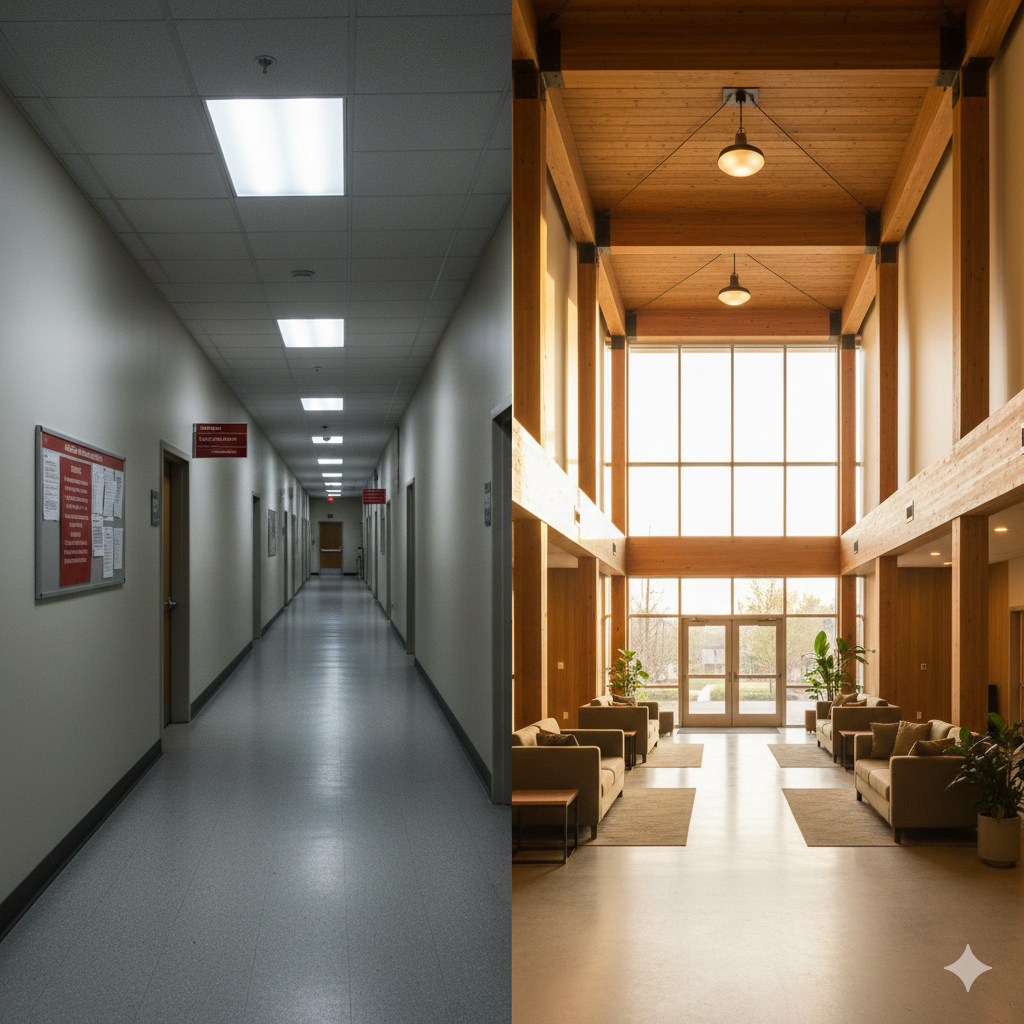
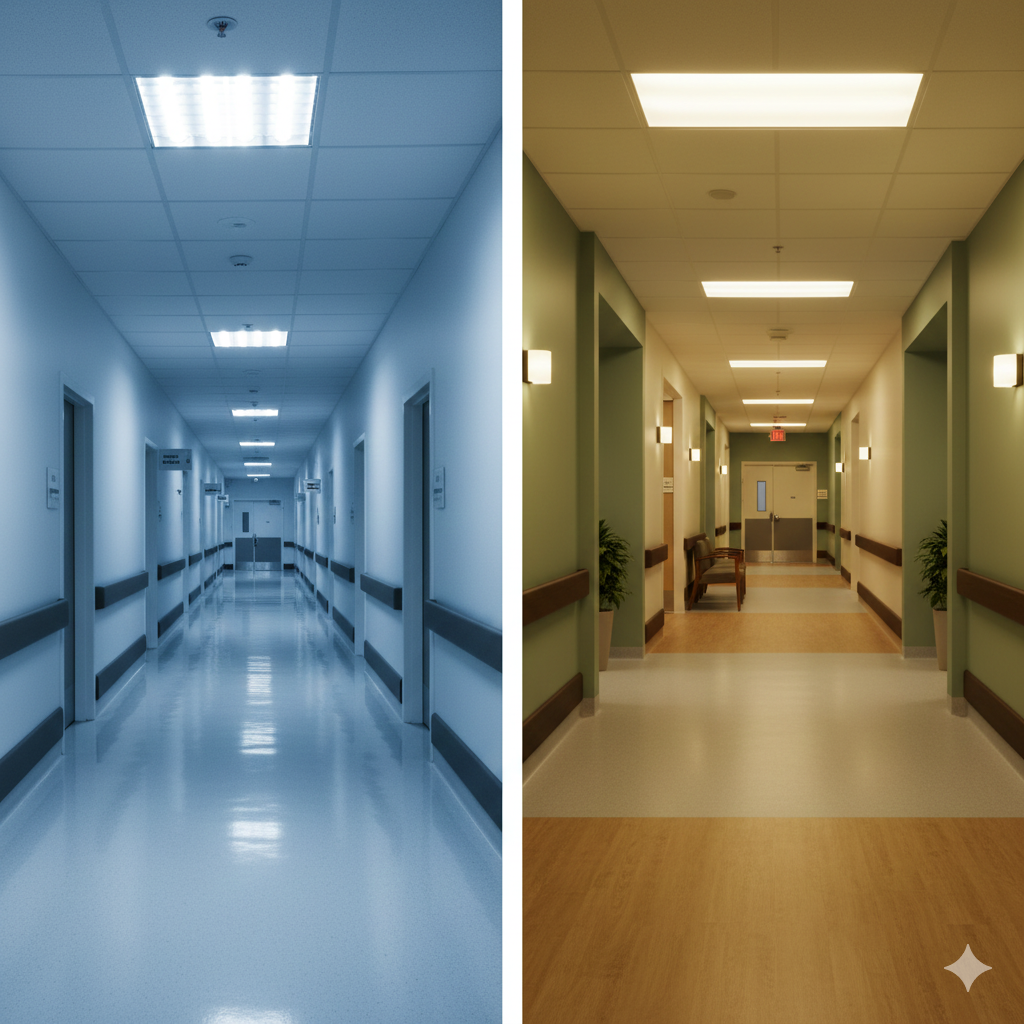
For decades, the standard approach to designing social services—homeless shelters, clinics, schools, and courtrooms—was defined by efficiency and control. The furniture was bolted to the floor. The walls were painted “institutional beige.” The lighting was harsh fluorescent. These spaces were built to manage people, not to care for them.
But for a person carrying the invisible weight of trauma, these design choices are not just ugly; they are aggressive.
A confusing corridor can trigger panic. A chair facing away from the door can trigger hypervigilance. A loud, echoing waiting room can trigger a “fight or flight” response.
Enter Trauma-Informed Design (TID).
This is a revolutionary framework that recognizes a simple, profound truth: the physical environment has the power to either re-traumatize a survivor or actively support their healing. It shifts the question from “What is wrong with this person?” to “What happened to this person, and how can this space help them feel safe?”
In this deep dive, we will explore the six core principles of Trauma-Informed Design, the science of how trauma alters spatial perception, and practical strategies to transform hostile environments into sanctuaries of support.
The Science: How Trauma Changes Spatial Perception
To understand Trauma-Informed Design, we must first understand the traumatized brain.
Trauma—whether from abuse, war, poverty, or systemic racism—physically alters the brain’s architecture. The amygdala (the threat detection center) becomes hyperactive. The prefrontal cortex (the rational planning center) dampens.
This means a survivor walking into a building is often scanning for threats on a subconscious level.
- Hypervigilance: They need to know who is behind them. They need to see the exit.
- Sensory Sensitivity: Loud noises or flickering lights are not just annoyances; they are perceived as physical assaults.
- Loss of Agency: Being forced into a situation where they have no choice (e.g., “Sit in this specific chair”) mimics the helplessness of the traumatic event.
Trauma-Informed Design is about removing these environmental triggers.
The 6 Principles of Trauma-Informed Design
Adapted from the SAMHSA (Substance Abuse and Mental Health Services Administration) guidelines for trauma-informed care, these principles are the bedrock of the design process.
1. Safety (Physical and Psychological)
Safety is the prerequisite for healing. If a person does not feel safe, they cannot engage in therapy, learning, or recovery.
- Sightlines: Reduce blind spots. A person should be able to see who is coming and going. Avoid maze-like corridors.
- Lighting: Ensure outdoor walkways and parking lots are well-lit to prevent fear of attack.
2. Trustworthiness and Transparency
Trauma often involves a betrayal of trust. The building should be “honest.”
- Wayfinding: Getting lost creates anxiety. Use clear, intuitive signage. A visitor should know exactly where they are and how to get to their destination without having to ask a stranger for help.
- Operations: If there is a security camera, make it visible. Hidden surveillance breeds paranoia.
3. Peer Support and Connection
Isolation fuels trauma. Design should encourage community.
- Cluster Seating: Avoid the “airport style” rows of chairs that force strangers to sit shoulder-to-shoulder (invading personal space). Arrange furniture in small clusters (L-shapes) that allow for conversation while maintaining boundaries.
4. Collaboration and Mutuality
The design process itself should be healing.
- Co-Design: Don’t design for the community; design with them. If you are building a shelter for women, ask the women what makes them feel safe. Their insights (e.g., “I need a lock on my locker to feel secure”) are often things an architect would miss.
5. Empowerment, Voice, and Choice
Trauma strips away control. Design should give it back.
- Variety: Provide options. Offer a mix of seating—high stools, soft couches, private nooks. Let the user choose where they feel most comfortable.
- Adjustability: Allow users to dim the lights or adjust the temperature in their room. This small act of agency restores a sense of self-efficacy.
6. Cultural, Historical, and Gender Issues
Trauma is often intersectional.
- Representation: Does the art on the walls reflect the people using the space? Or is it generic corporate art? Culturally responsive design validates the identity of the user.
- Gender Neutrality: For trans and non-binary individuals, bathrooms can be sites of trauma. providing inclusive, single-stall restrooms removes this stressor.
Design Strategies: The “Palette” of Healing
How do we translate these principles into bricks and mortar?
The Importance of “Prospect and Refuge”
This evolutionary theory is crucial for Trauma-Informed Design.
- Prospect: The ability to see out and survey the environment (threat detection).
- Refuge: A protected covering where one feels safe (hiding).
- Application: A window seat with a lowered ceiling. It allows the user to watch the world (Prospect) while their back is protected (Refuge).
Biophilic Design as Therapy
Nature is a powerful regulator of the nervous system.
- Fractal Patterns: Our brains are soothed by the complex, repeating patterns found in nature (leaves, waves). Incorporating these patterns in wallpaper or fabrics can lower stress levels.
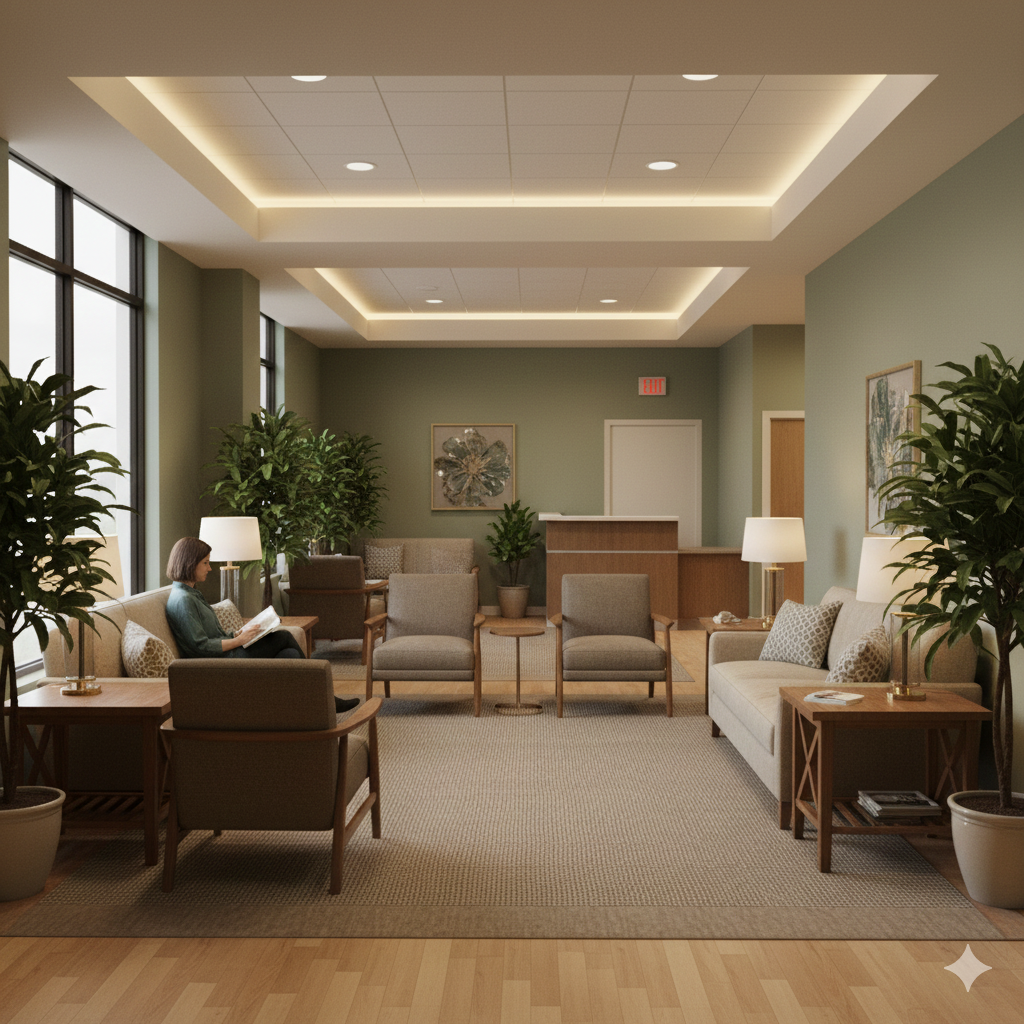
- Natural Materials: Wood and stone feel “grounding.” Cold materials like steel and glass can feel “clinical” and sterile, reminding users of hospitals or prisons.
Acoustic Privacy
Trauma survivors often have a heightened startle reflex.
- Sound Dampening: Use acoustic panels, rugs, and soft furnishings to absorb sharp noises (like a slamming door).
- Visual Privacy: In counseling centers, ensure that glass walls have frosting or blinds. A survivor disclosing a painful memory should not feel like they are in a fishbowl.

Case Studies in Compassion
1. The richstone Family Center (California)
Designed for victims of domestic violence, this center avoids the “fortress” look. Instead of barbed wire and metal detectors, it uses landscape architecture (dense hedges and berms) to provide security. It looks like a home, not a bunker.
2. Designing for Foster Youth
Many foster care facilities feel like detention centers. Trauma-Informed Design reimagines them. One project replaced the “staff station” (which creates an “us vs. them” power dynamic) with a central kitchen island. Staff and youth cook and eat together, breaking down barriers and building trust.
The Business Case for Compassion
Trauma-Informed Design is often dismissed as “too expensive.” But the cost of not doing it is higher.
- Reduced Incidents: In schools and shelters, TID has been shown to reduce behavioral outbursts and violent incidents. When people feel safe, they act safely.
- Staff Retention: Social workers and nurses suffer from burnout. Working in a beautiful, supportive environment reduces turnover.
- Better Outcomes: Students learn better. Patients heal faster. The building becomes an active participant in the success of the organization.
Conclusion
Trauma-Informed Design is an act of radical empathy. It asks the architect to put aside their ego and design through the eyes of the most vulnerable user.
It teaches us that a building is not neutral. Every color, every corner, and every light fixture is sending a message. In the past, that message was often: “You are broken. We are in control.”
With Trauma-Informed Design, we can change that message to: “You are safe. You are valued. You have a choice.”
By creating spaces that heal, we don’t just build better buildings; we help rebuild lives.
Frequently Asked Questions (FAQ)
Is Trauma-Informed Design only for healthcare facilities?
No. Trauma is ubiquitous. Schools, libraries, courthouses, workplaces, and even residential housing benefit from these principles. Creating a calm, safe environment helps everyone, regardless of their trauma history (this is the Universal Design benefit).
Does TID require specialized architects?
While there are firms that specialize in it, any architect can apply the principles. It requires education, empathy, and a willingness to engage in a participatory design process with the users.
Can Trauma-Informed Design be applied to prisons?
Yes. “Restorative Justice” architecture is a growing field. It redesigns correctional facilities to focus on rehabilitation rather than punishment, using natural light, colors, and campus-like layouts to reduce violence and recidivism.
What is the most common mistake in designing for trauma?
Over-securing the space. Adding metal detectors, cameras, and guards creates a “prison-like” atmosphere that increases anxiety. Trauma-Informed Design seeks to provide security invisibly through environmental design (CPTED).
How do colors affect trauma?
Color psychology is key. Cool colors (blues, greens) are generally calming. High-energy colors (bright reds, chaotic patterns) can be over-stimulating and triggering. TID favors nature-inspired, muted palettes.