Table of Contents
For the last two decades, the architectural world has been obsessed with “Green Buildings.” We focused on saving the planet—reducing energy consumption, minimizing waste, and lowering carbon footprints. These were noble and necessary goals. But in the pursuit of energy efficiency, we often forgot the most important element of the building: the human being inside it.
We sealed our buildings so tight to save energy that we trapped pollutants inside. We optimized floor plans for density, sacrificing mental space. We built for the machine, not the operator.
Now, a new paradigm has emerged: Wellness Architecture.
Wellness Architecture is the next evolution of sustainable design. It shifts the focus from “building health” to “human health.” It recognizes that our physical surroundings have a profound, measurable impact on our respiratory health, sleep quality, stress levels, and cognitive function. If “Green Architecture” is about doing less harm to the environment, Wellness Architecture is about doing more good for the people.
In this comprehensive guide, we will explore the 10 Core Principles that define this movement. These are not just aesthetic choices; they are evidence-based strategies derived from frameworks like the WELL Building Standard to create spaces that actively promote longevity and vitality.
1. Air: The Invisible Foundation
You can survive three weeks without food, three days without water, but only three minutes without air. Yet, indoor air quality (IAQ) is often 2 to 5 times more polluted than outdoor air. Wellness Architecture starts with the breath.
- Filtration Overhaul: Standard filters protect the HVAC equipment; wellness filters protect human lungs. This means implementing MERV 13 or HEPA filtration to scrub particulate matter (PM2.5), pollen, and pathogens from the air stream.
- Source Elimination: It’s not just about cleaning the air; it’s about not dirtying it. This requires strict bans on combustion (gas stoves) indoors and managing humidity to prevent mold growth.
- Real-Time Monitoring: Healthy buildings are “aware.” They use sensors to monitor CO2 levels. If a conference room gets stuffy (high CO2), the building automatically ramps up fresh air intake to prevent the “afternoon slump.”
2. Water: Hydration by Design
Dehydration is a primary cause of fatigue and cognitive decline. Wellness Architecture seeks to make water the most accessible and desirable beverage in the building.
- Filtration: Removing heavy metals, sediments, and the taste of chlorine is non-negotiable. If the tap water tastes bad, people drink soda.
- Visibility: In many offices, the water cooler is hidden in a dark back corner. Wellness design places beautiful, high-tech hydration stations in high-traffic areas, encouraging regular drinking.
- Testing: Regular testing of water quality for Legionella and lead ensures that the building’s pipes aren’t actively harming the occupants.

3. Nourishment: The Food Environment
Architecture can dictate your diet. If the only food available is in a vending machine filled with chips, you eat chips. Wellness Architecture manipulates the “food environment” to make the healthy choice the easy choice.
- Nudging: Designing cafeterias so that fruits and vegetables are placed at eye level and the first thing you see, while sugary treats are hidden or placed in harder-to-reach areas.
- Space for Preparation: Providing inviting, clean break rooms with real appliances (toasters, blenders) encourages employees to bring healthy homemade lunches rather than ordering fast food.
- Urban Farming: Integrating edible gardens or rooftop planters where occupants can grow (and eat) fresh herbs and vegetables.
4. Light: Circadian Synchronization
We evolved to wake with the sun and sleep with the moon. Modern electric lighting has broken this cycle, leading to chronic sleep deprivation. Wellness Architecture aims to fix our internal clocks.
- Right to Light: Prioritizing floor plans that give every occupant a view of a window. Daylight exposure is the strongest “Zeitgeber” (time-giver) for regulating circadian rhythms.
- Dynamic Lighting: Using “Human-Centric Lighting” systems that change color temperature throughout the day. Bright, blue-enriched light in the morning for alertness; warm, amber light in the evening to stimulate melatonin production.
- Glare Control: Designing automated shading systems that block harsh direct sun (which causes eye strain) while still allowing natural light to penetrate deep into the room.
5. Movement: Active Design
Sedentary lifestyles are the “new smoking.” Wellness Architecture fights this through Active Design—designing buildings that make you want to move.
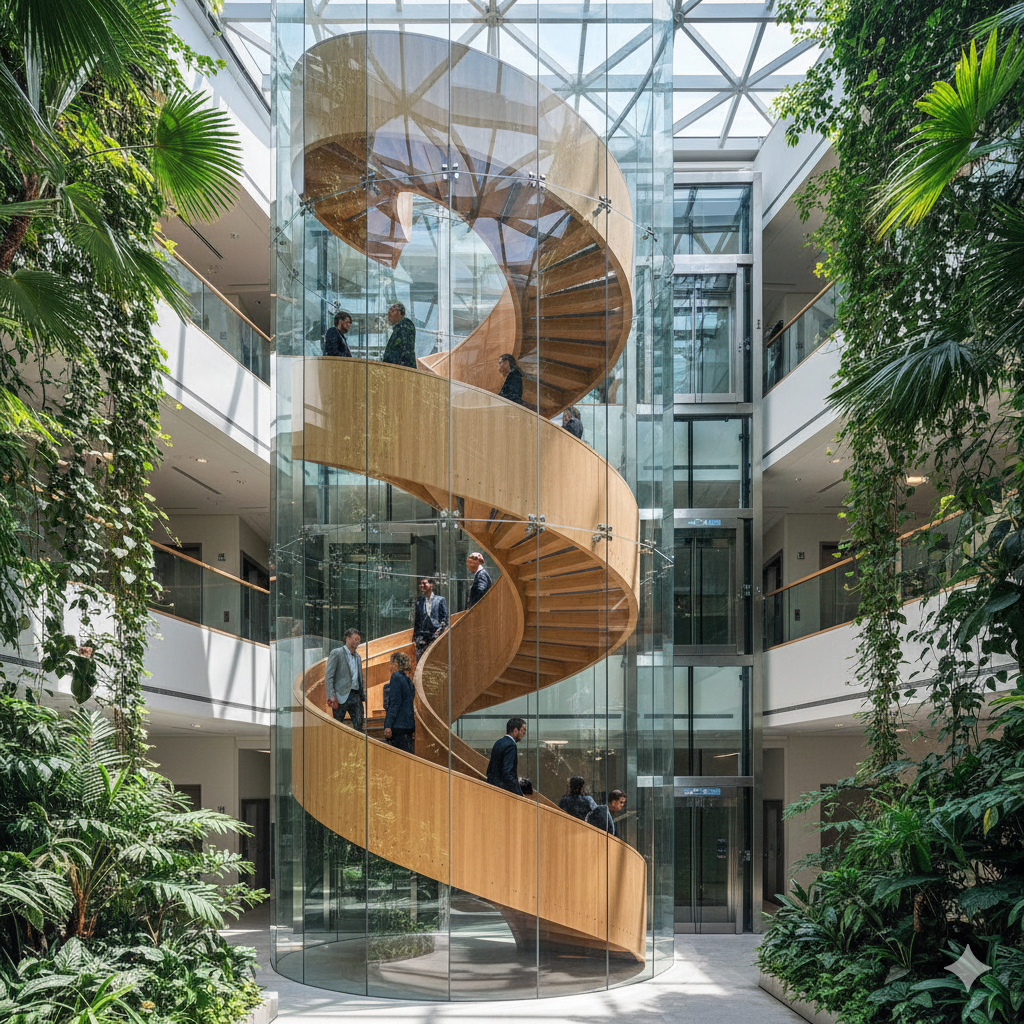
- The Irresistible Staircase: In most buildings, the elevator is front and center, while the stairs are hidden behind a heavy fire door. Active Design flips this. The staircase is the architectural centerpiece—wide, well-lit, and beautiful—encouraging people to walk up a few flights.
- Circulation Paths: Designing office layouts that require movement. Placing the printer or the coffee machine a short walk away rather than right next to the desk forces “micro-movements” throughout the day.
- End-of-Trip Facilities: Providing luxury showers and bike storage to encourage cycling to work.
6. Thermal Comfort: Personalized Zones
The “thermostat wars” are a legendary source of office stress. One person is freezing; the other is sweating. Wellness Architecture recognizes that there is no single perfect temperature for everyone.
- Micro-Zoning: Using sophisticated HVAC systems that allow for smaller zones of control.
- Radiant Systems: Using heated or cooled floors/ceilings. Radiant heat is often perceived as more comfortable and natural than forced air blowing on your face.
- Personal Control: The ultimate luxury is a desk fan or a heated chair that the user controls. Research shows that just having the ability to control temperature improves satisfaction, even if the user rarely uses it.
7. Sound: Acoustic Hygiene
Noise pollution is a major driver of cortisol (stress) and a killer of productivity. Open-plan offices failed largely because they ignored acoustic privacy.
- Soundscaping: It’s not just about silence; it’s about the right sound. Using sound masking systems (white noise or pink noise) to blur speech intelligibility so you aren’t distracted by a conversation 20 feet away.
- Absorption: Using high-performance acoustic baffles, rugs, and soft furnishings to reduce reverberation time.
- Zoning: Creating strict “Quiet Zones” (like library spaces) separate from “Social Zones” (cafeterias), so loud collaboration doesn’t bleed into deep work time.
8. Materials: Non-Toxic Living
Many standard building materials off-gas toxic chemicals (VOCs – Volatile Organic Compounds) like formaldehyde and benzene for years after installation. Wellness Architecture demands a detox.
- The Red List: Adhering to the “Red List” (from the Living Building Challenge)—a list of the “worst in class” chemicals that are banned from the project.
- Natural Materials: Prioritizing wood, stone, wool, and cork. These materials are not only non-toxic but also biophilic (see below).
- Transparency: Demanding “Health Product Declarations” (HPDs) from manufacturers. It is essentially a nutrition label for building products, listing every ingredient.
9. Mind: Restorative Spaces
Mental health is a spatial issue. Wellness Architecture integrates psychology into the blueprint.
- Biophilia: We have covered this in depth elsewhere, but incorporating plants and natural patterns is crucial for mental restoration.
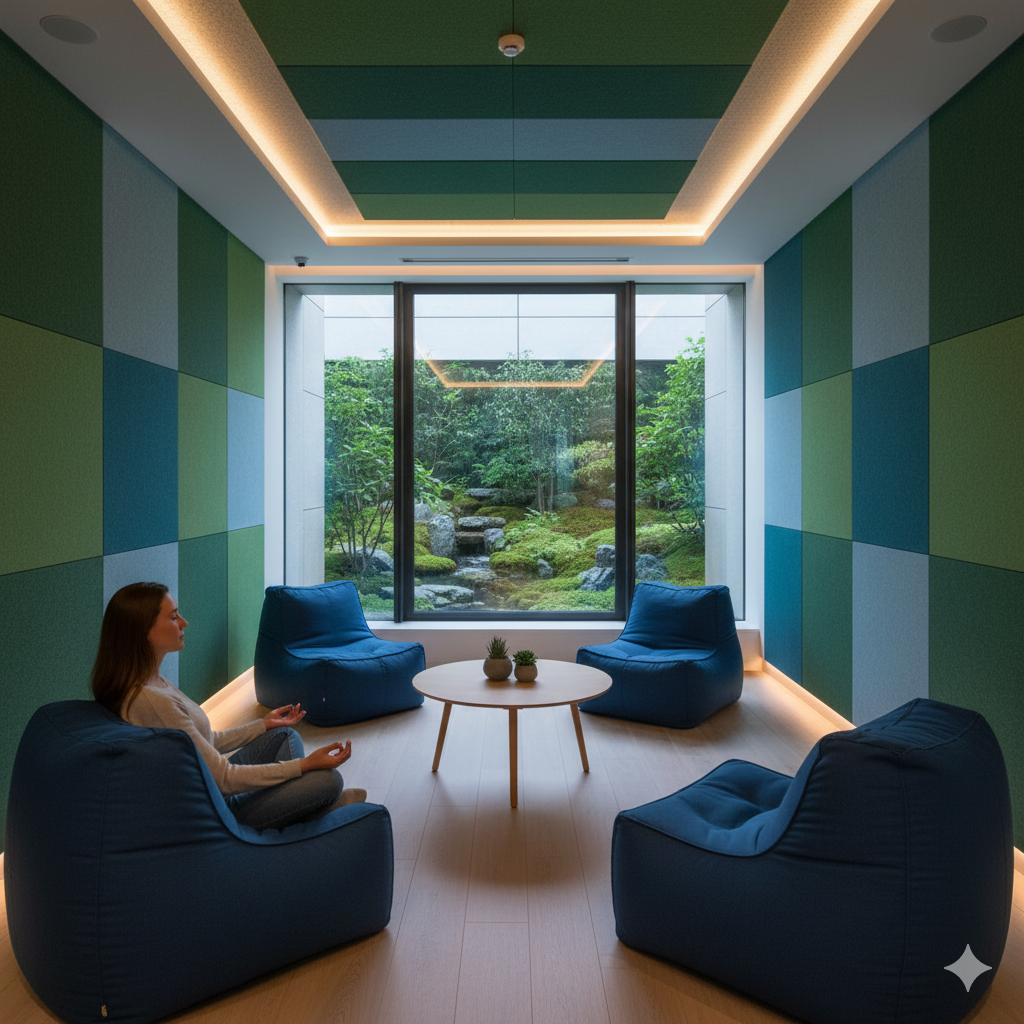
- Refuge Spaces: Providing “recharge rooms”—small, private, tech-free spaces where an overwhelmed employee or resident can go to meditate, pray, or simply breathe for 10 minutes.
- Beauty: It sounds subjective, but beauty heals. Spaces that are aesthetically pleasing trigger positive emotional responses that buffer against anxiety.
10. Community: Social Health
Loneliness is a health epidemic. A building can either isolate people (long hotel corridors) or bring them together.
- Collision Zones: Designing spaces where paths cross intentionally. A central coffee bar or a wide landing on a staircase encourages serendipitous interactions and social bonding.
- Inclusive Design: Ensuring the building is welcoming to all bodies, ages, and neurotypes. A space cannot be “healthy” if it excludes people with disabilities.
- Gathering Spaces: Flexible communal areas that can host yoga classes, town halls, or parties.
Conclusion
Wellness Architecture is not a trend; it is a correction. For too long, we treated buildings as static containers for commerce or shelter. We now understand that buildings are active participants in our public health.
By implementing these 10 principles—Air, Water, Nourishment, Light, Movement, Thermal Comfort, Sound, Materials, Mind, and Community—we can turn our built environment into a powerful engine for longevity.
The ROI of Wellness Architecture is measured not just in energy savings, but in fewer sick days, happier families, and a society that thrives rather than just survives.