Table of Contents
Bioclimatic facades are transforming our concept of what a building can be. For over a century, the vast majority of our buildings have been static, sealed boxes. Their walls, or building envelopes, are dumb barriers designed to fight a constant war against the elements—a war waged with colossal amounts of energy for heating, cooling, and artificial lighting. But what if a building’s skin could be more like our own? What if it could intelligently respond to the sun, the wind, and the temperature, actively working with the environment instead of against it?
This is the revolutionary promise of bioclimatic facades. They represent the next frontier in smart building design, moving beyond passive insulation to create dynamic, responsive, and incredibly energy-efficient architectural systems. These are not just walls; they are breathing membranes, intelligent interfaces between the interior and exterior worlds. They are designed to optimize thermal comfort, maximize natural light, and drastically reduce a building’s ecological footprint.
This deep dive will explore the world of bioclimatic facades, uncovering how they work, the different technologies driving them, and the monumental benefits they offer. We will look at pioneering examples from around the globe that prove this is not a far-off science fiction concept, but a tangible reality shaping the sustainable and intelligent cities of tomorrow.
What Exactly Are Bioclimatic Facades?
At its core, a bioclimatic facade is a technologically advanced building envelope that adapts in real-time to changing environmental conditions. Think of it as a building’s climate-responsive skin. Instead of a single, static layer of glass, brick, or concrete, it is a multi-layered, often kinetic system that can change its properties to regulate the flow of energy, light, and air.
The primary goal is to achieve maximum comfort for the building’s occupants using minimal energy. This is accomplished by strategically managing the building’s relationship with the local climate.
- On a hot, sunny day: The facade might deploy automated louvers or screens to block solar radiation, preventing the interior from overheating and reducing the need for air conditioning.
- On a cold, clear day: The same facade could retract its shading elements and allow sunlight to penetrate deep into the building, providing natural heat and light—a concept at the heart of passive solar design.
- On a mild, breezy day: Operable vents and panels could open up to encourage natural ventilation, circulating fresh air and reducing the load on mechanical systems.
By constantly adjusting to the external environment, bioclimatic facades create a stable, comfortable, and healthy indoor environment while minimizing the building’s reliance on fossil fuels. This dynamic capability is the key differentiator that elevates them far beyond traditional building envelopes.
The Mechanisms: How Bioclimatic Facades Work
The intelligence of bioclimatic facades lies in their integration of various design strategies and technologies. They are not a one-size-fits-all solution but a toolkit of systems that can be customized to a specific climate and building orientation.
1. Dynamic Solar Shading
This is one of the most common features. Uncontrolled solar gain is a primary cause of overheating in modern glass buildings. Bioclimatic facades address this with automated, movable shading devices. These can be external louvers, fins, screens, or even intricate, origami-like panels that track the sun’s path throughout the day and across the seasons, providing shade precisely when and where it’s needed.
2. Natural Ventilation and Double-Skin Facades
Many bioclimatic facades are designed as “double-skin” systems. This involves an outer layer of glass and an inner wall, separated by an air cavity that can be several inches to several feet wide. This cavity acts as a thermal buffer, insulating the building from extreme heat and cold. Furthermore, by incorporating automated vents at the top and bottom, this cavity can create a chimney effect (or stack effect) to draw cool air in and expel hot air, facilitating natural ventilation without requiring occupants to open windows.
3. Optimized Daylighting
While blocking solar heat is crucial, so is harnessing natural daylight to reduce the need for artificial lighting, which accounts for a significant portion of a commercial building’s energy use. Bioclimatic facades use light shelves, strategically angled fins, and light-diffusing materials to bounce sunlight deep into the building’s interior, illuminating spaces far from the windows while controlling glare.
4. Responsive and Smart Materials
The cutting edge of bioclimatic facades involves materials that change their properties without any mechanical parts.
- Thermochromic glass darkens when heated by the sun to block solar radiation.
- Photochromic glass tints in response to UV light levels.
- Phase-change materials (PCMs) can be integrated into the facade to absorb heat during the day and release it at night, helping to regulate internal temperatures.
These smart materials pave the way for truly seamless and silent responsive architecture.
A Spectrum of Innovation: Types of Bioclimatic Facades
The world of bioclimatic facades is diverse, with several established typologies and exciting new hybrids emerging.
Double-Skin Facades
As mentioned, these systems consist of two glass skins separated by an air corridor. They are exceptionally good at providing acoustic and thermal insulation, making them ideal for buildings in noisy urban environments or extreme climates. The air cavity can house the building’s shading devices, protecting them from the weather.
Kinetic or Dynamic Facades
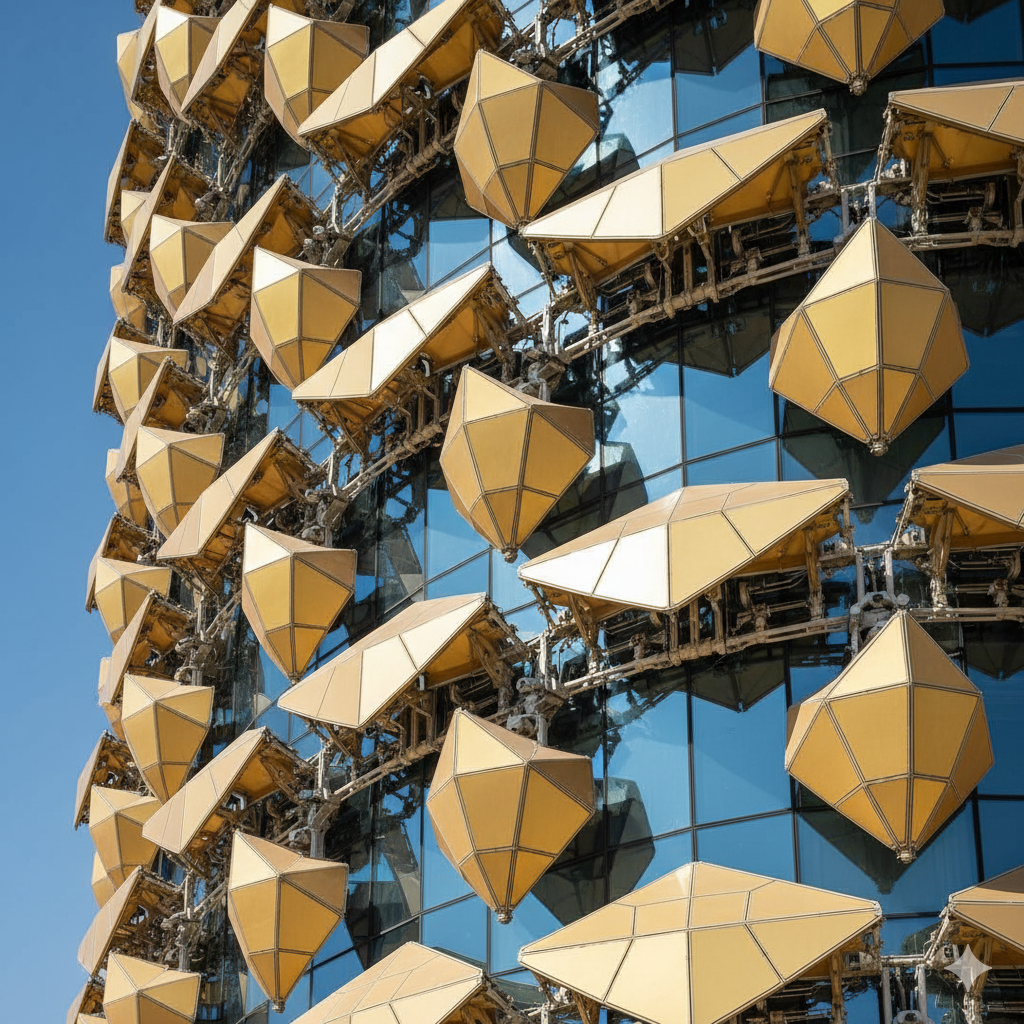
These are the most visually spectacular types of bioclimatic facades. They feature moving components that physically transform the building’s appearance in response to environmental data from sensors. These kinetic elements are controlled by a central Building Management System (BMS) that analyzes temperature, sun position, and wind speed to make intelligent adjustments.
Green Facades (Living Walls)
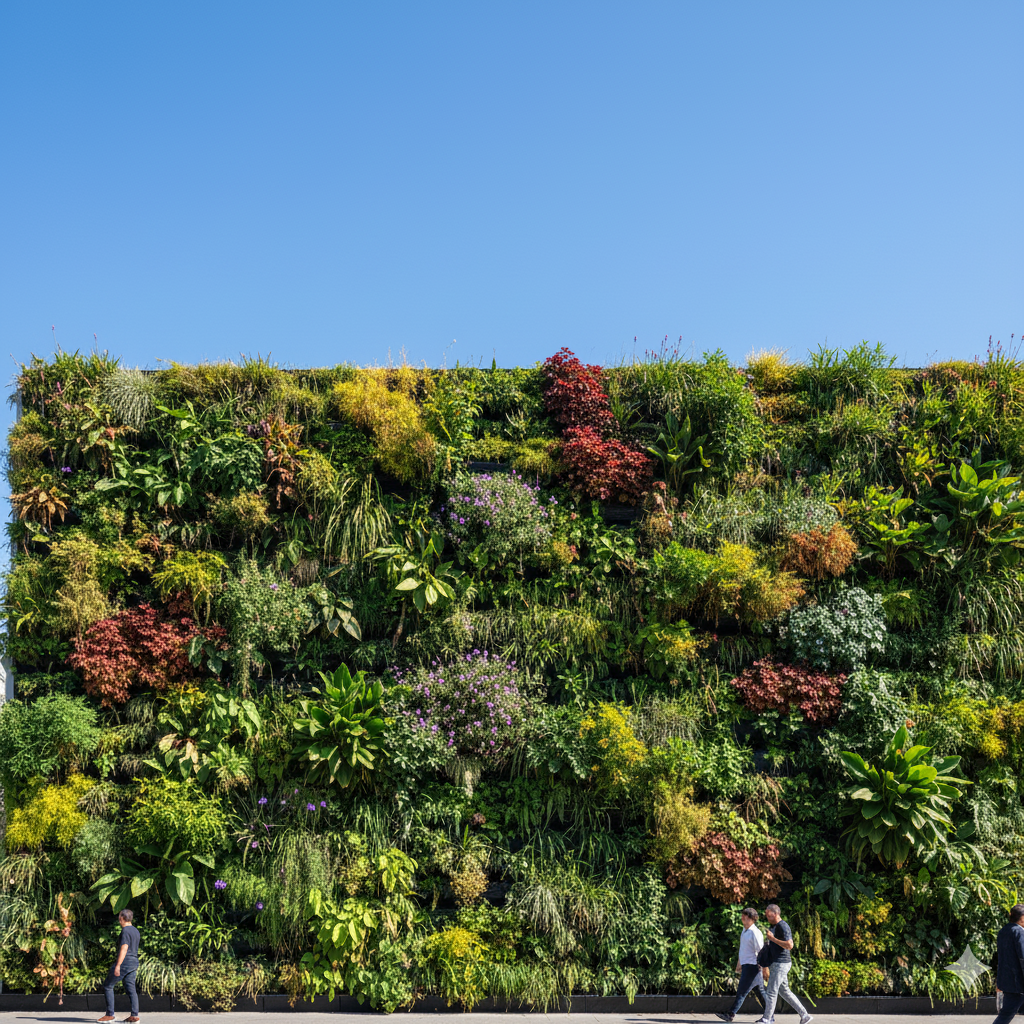
Green facades integrate vegetation directly into the building envelope. A layer of climbing plants or a system of modular panels containing soil and vegetation is attached to the exterior walls. These “living walls” are a powerful form of bioclimatic facade. They provide excellent shading and cooling through evapotranspiration, improve air quality by filtering pollutants, reduce noise, and create habitats for biodiversity. They also offer profound biophilic benefits, connecting occupants with nature.
The Transformative Benefits of Smart Facades
Adopting bioclimatic facades goes far beyond a simple desire to be “green.” The benefits are comprehensive, impacting everything from the building’s operating costs to the health and productivity of its occupants.
- Radical Energy Efficiency: This is the most significant benefit. By intelligently managing solar gain, natural light, and ventilation, bioclimatic facades can reduce a building’s energy consumption for heating, cooling, and lighting by up to 70% compared to conventional designs.
- Enhanced Occupant Comfort and Well-being: These systems create superior indoor environments. They eliminate glare, provide consistent temperatures, offer abundant natural light, and improve air quality—all factors proven to boost occupant health, happiness, and productivity.
- Stunning Architectural Aesthetics: Dynamic facades give architects a new palette to work with. The ever-changing nature of the building envelope creates a living, breathing piece of architecture that is visually engaging and often becomes an iconic landmark.
- Increased Resilience and Future-Proofing: In an era of climate change and unpredictable weather, buildings with bioclimatic facades are inherently more resilient. Their ability to adapt to external conditions makes them better equipped to handle heatwaves and reduce strain on the energy grid.
Case Studies: Bioclimatic Facades in the Wild
These concepts are being masterfully executed in buildings across the globe.
Institut du Monde Arabe (Arab World Institute) – Paris, France
One of the earliest and most famous examples, Jean Nouvel’s 1987 masterpiece features a south-facing facade with 240 photo-sensitive diaphragms. These mechanical apertures operate like the lens of a camera, opening and closing to control the amount of light and heat entering the building, all while creating mesmerizing patterns inspired by traditional Arabic latticework (mashrabiya).
Al Bahr Towers – Abu Dhabi, UAE
These twin skyscrapers feature one of the most advanced kinetic facades ever built. Their entire exterior is shielded by a system of 2,000 umbrella-like modules that open and close in response to the sun’s movement. This modern interpretation of the mashrabiya reduces solar gain by over 50%, significantly cutting the energy required to cool the buildings in the intense desert climate.
Council House 2 (CH2) – Melbourne, Australia
Recognized as one of the world’s greenest office buildings, CH2 in Melbourne employs a holistic bioclimatic approach. Its west-facing facade features a system of recycled timber louvers that automatically track the sun. The north facade uses green facades and balconies to provide shading, while light shelves on the exterior bounce daylight deep into the office floors.
Conclusion: The Dawn of the Breathing Building
The era of the sealed, static building is coming to an end. In a world demanding greater sustainability and smarter solutions, the building envelope can no longer be a passive barrier. It must become an active, intelligent, and responsive system that works in harmony with the natural world.
Bioclimatic facades are the heart of this new architectural paradigm. They are where engineering, ecology, and design converge to create buildings that are not only less harmful but actively beneficial to their environment and their occupants. They are the physical manifestation of smart building design, demonstrating that we can create spaces that are beautiful, comfortable, and radically energy-efficient. As we continue to innovate with new materials and smarter automation, the future of architecture is clear: it will be a future of buildings that breathe.
Frequently Asked Questions (FAQ)
What is the main difference between a bioclimatic facade and a standard curtain wall?
A standard curtain wall is a static, non-structural outer wall, usually made of glass, that is primarily designed to keep the weather out. A bioclimatic facade, on the other hand, is a dynamic and responsive system with moving parts or smart materials designed to actively manage light, heat, and air to improve energy efficiency and occupant comfort.
Are bioclimatic facades expensive to install and maintain?
The initial investment for bioclimatic facades is typically higher than for conventional systems due to their complexity, materials, and automation. However, they generate a significant return on investment over the building’s life through drastic energy savings. Maintenance is a key consideration, and systems must be designed for durability and ease of access to mechanical components.
Can this technology be applied to residential homes?
Yes, absolutely. While large-scale kinetic facades are more common on commercial buildings, the principles can be scaled down. High-performance homes often use bioclimatic strategies like operable exterior shades, carefully designed roof overhangs for passive solar control, and green screens or trellises for natural cooling.
What role does automation and AI play in these facades?
Automation is critical. Bioclimatic facades rely on a network of sensors that feed data (temperature, light levels, wind speed, occupancy) to a central Building Management System (BMS). This system then makes real-time decisions to adjust the facade components. The future will see AI and machine learning integrated into these systems, allowing the facade to learn and predict patterns for even greater efficiency.