Table of Contents
In an era increasingly defined by environmental consciousness and the pressing need for sustainable living, passive house design stands out as a revolutionary approach to building. Far more than just a trend, it’s a rigorous, performance-based standard that delivers unparalleled energy efficiency, superior indoor air quality, and exceptional comfort. For homeowners, builders, and architects alike, understanding the intricacies of passive house design is no longer a niche interest but a fundamental requirement for creating truly future-proof structures.
This comprehensive guide will delve deep into every facet of passive house design, demystifying its core principles, outlining its myriad benefits, and providing a practical roadmap for achieving this gold standard in sustainable construction. Whether you’re considering building a new home, undertaking a deep energy retrofit, or simply curious about the pinnacle of green building, prepare to embark on an illuminating journey into the world of ultimate energy efficiency.
What Exactly is Passive House Design? A Philosophy of Performance
At its heart, passive house design (or Passivhaus as it’s known internationally) is a voluntarily accepted standard for energy efficiency that results in ultra-low energy buildings requiring very little energy for space heating or cooling. Developed in Germany in the late 1980s by Professors Bo Adamson and Wolfgang Feist, it’s based on principles that have been refined and proven over decades. The core philosophy is straightforward: rather than relying heavily on active heating and cooling systems, a passive house minimizes energy demand through meticulous design and construction.
The standard isn’t prescriptive in terms of materials or appearance; instead, it focuses on measurable performance criteria. A certified passive house must meet stringent requirements for:
- Space Heating Demand: Less than 15 kWh/(m²a) or a peak heat load of 10 W/m².
- Space Cooling Demand: Less than 15 kWh/(m²a) or a peak cooling load of 10 W/m².
- Primary Energy Renewable (PER) Demand: A measure of the total energy required for all building services (heating, cooling, hot water, auxiliary electricity) – less than 60 kWh/(m²a).
- Airtightness: A maximum of 0.6 air changes per hour (ACH) at 50 Pascals pressure (n50 ≤ 0.6/h). This is incredibly tight, meaning virtually no uncontrolled air leakage.
These targets are remarkably ambitious and drive the entire design and construction process. They force a holistic view of the building as an interconnected system, where every component plays a critical role in achieving the desired energy performance. The result is a building that effectively insulates itself from the outside world, maintaining a stable and comfortable indoor environment with minimal energy input.
The Five Core Principles of Passive House Design
Achieving the stringent passive house standard relies on the meticulous application of five fundamental principles. These are not independent features but rather interwoven elements that work synergistically to create a high-performance enclosure.
1. Super-Insulation
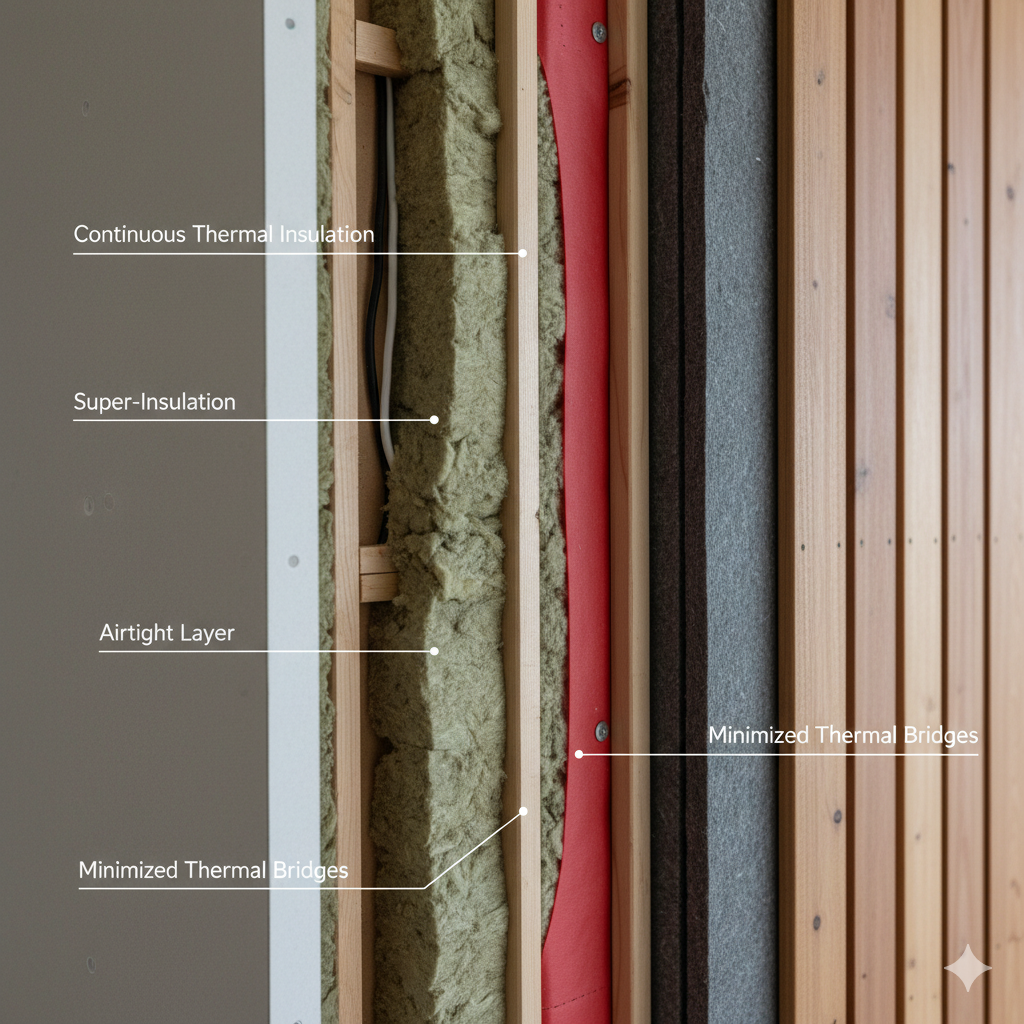
Perhaps the most immediately recognizable characteristic of passive house design is its commitment to super-insulation. This goes far beyond typical building codes, often doubling or tripling the insulation levels in walls, roofs, and floors. The goal is to create an unbroken thermal envelope that drastically reduces heat loss in winter and heat gain in summer.
- Walls: Thick layers of insulation (e.g., cellulose, mineral wool, rigid foam boards) are common, often leading to wall assemblies that are 12-18 inches thick or more.
- Roofs: High R-values are achieved with deep insulation layers, protecting against heat transfer through the top of the building.
- Slabs/Foundations: Insulation is applied both under the slab and around the foundation perimeter to prevent heat loss to the ground.
The type of insulation isn’t as critical as its continuous application and high R-value. This robust thermal blanket is the first line of defense against energy waste.
2. Thermal Bridge-Free Design
Thermal bridges are weak points in the building envelope where heat can more easily flow in or out. These typically occur where building components change or penetrate the insulation layer, such as at wall-floor junctions, window frames, or where structural elements like studs or rafters interrupt insulation. In conventional construction, thermal bridges can account for a significant portion of heat loss.
Passive house design meticulously eliminates or minimizes thermal bridges through:
- Careful detailing: Architects and builders work together to design connections that maintain continuous insulation.
- Structural solutions: Using materials with low thermal conductivity for structural elements that penetrate the envelope, or ensuring that insulation wraps completely around structural components.
- Continuous exterior insulation: Often employed to create an uninterrupted thermal layer outside the structural frame.
Eliminating thermal bridges is crucial not only for energy performance but also for preventing condensation issues and maintaining consistent surface temperatures indoors, enhancing comfort.
3. High-Performance Windows and Doors
Windows and doors are traditionally major sources of energy loss. In passive house design, they are transformed into high-performance components. This means:
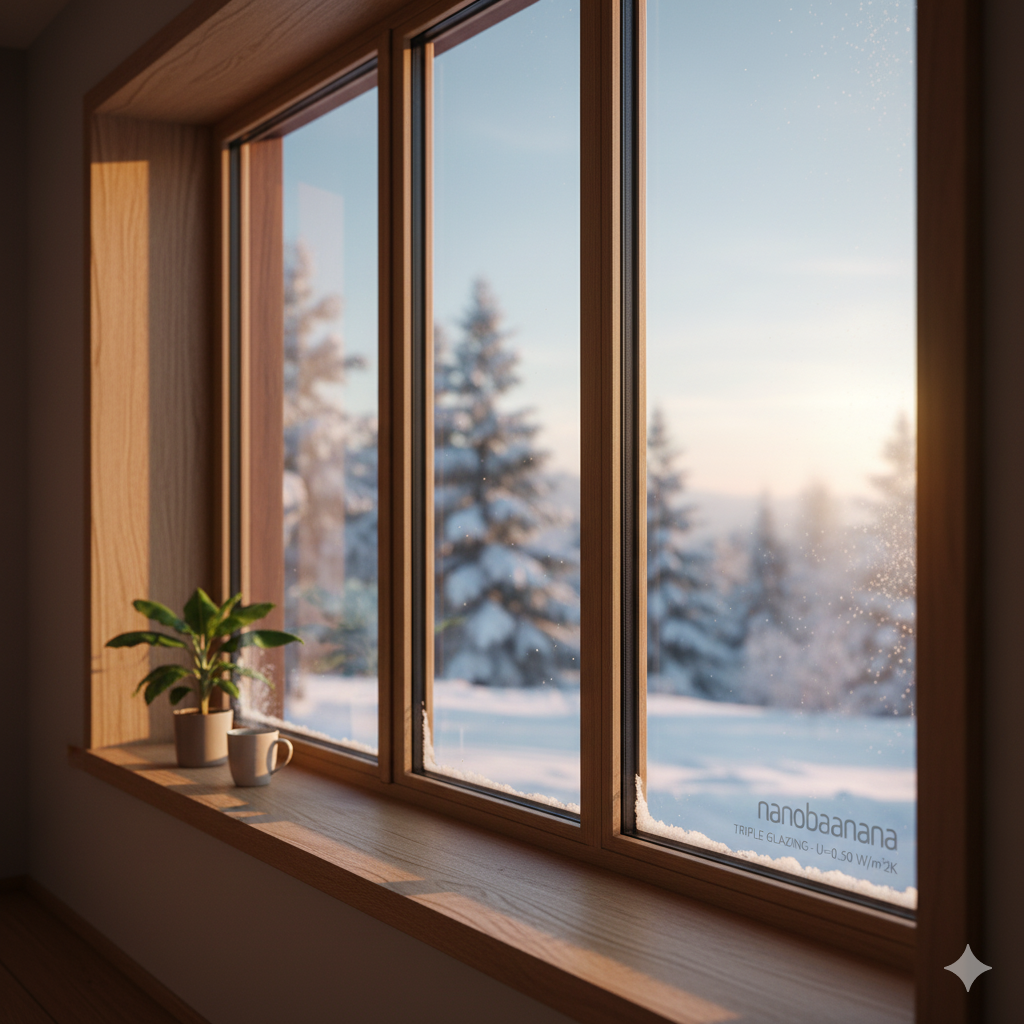
- Triple-pane glazing: Most passive houses utilize windows with three panes of glass, often with low-emissivity (low-e) coatings and inert gas fills (like argon or krypton) between the panes to further reduce heat transfer.
- Insulated frames: Window and door frames themselves are heavily insulated, minimizing heat loss through the frame material.
- Airtight installation: Windows and doors are meticulously sealed into the building envelope to prevent air leakage.
- Optimized orientation: Windows are strategically placed and sized to maximize passive solar gain in winter while minimizing unwanted solar gain in summer, often using shading elements.
These high-performance fenestration units become an integral part of the thermal envelope, balancing natural light and views with extreme energy efficiency.
4. Airtight Construction
Perhaps the most challenging and critical principle to achieve is extreme airtightness. An uncontrolled airflow through cracks and gaps in the building envelope allows conditioned air to escape and unconditioned air to enter, leading to significant energy waste and potential moisture problems.
Passive house standards require an airtightness level that is approximately 10 times better than typical conventional construction. This is achieved through:
- Continuous airtight layer: A specific layer (e.g., membranes, tapes, sealed sheathing) is designated and meticulously installed to ensure an unbroken airtight seal around the entire building.
- Rigorous sealing: Every penetration (wires, pipes, ducts) and every joint is carefully sealed with specialized tapes and sealants.
- Blower door testing: The airtightness is verified multiple times during construction using a blower door test, which measures air leakage and helps identify problem areas for remediation.
Achieving this level of airtightness requires exceptional attention to detail, skilled craftsmanship, and a commitment from the entire construction team. It’s a cornerstone of the passive house standard.
5. Ventilation with Heat Recovery (HRV/ERV)
In a building that is super-insulated and incredibly airtight, natural ventilation is insufficient to maintain good indoor air quality. Therefore, mechanical ventilation with heat recovery is essential.
- Heat Recovery Ventilators (HRVs) or Energy Recovery Ventilators (ERVs): These systems continuously supply fresh, filtered air to living spaces (bedrooms, living rooms) and exhaust stale air from wet spaces (kitchens, bathrooms). Crucially, they recover up to 90% or more of the heat (and sometimes humidity) from the outgoing air and transfer it to the incoming fresh air in winter, and vice-versa in summer.
- Continuous fresh air: HRVs/ERVs ensure a constant supply of fresh, filtered air, removing pollutants, odors, and excess moisture, leading to superior indoor air quality.
- Energy efficiency: By recovering heat, these systems prevent the energy loss that would occur with simple exhaust fans, making them incredibly efficient.
This controlled ventilation system is vital for health, comfort, and maintaining the building’s overall energy performance, completing the thermal envelope’s performance.
The Profound Benefits of Passive House Design
Investing in passive house design yields a multitude of benefits that extend far beyond simple energy savings. These advantages contribute to a healthier, more comfortable, and more sustainable living experience.
1. Drastically Reduced Energy Consumption and Bills
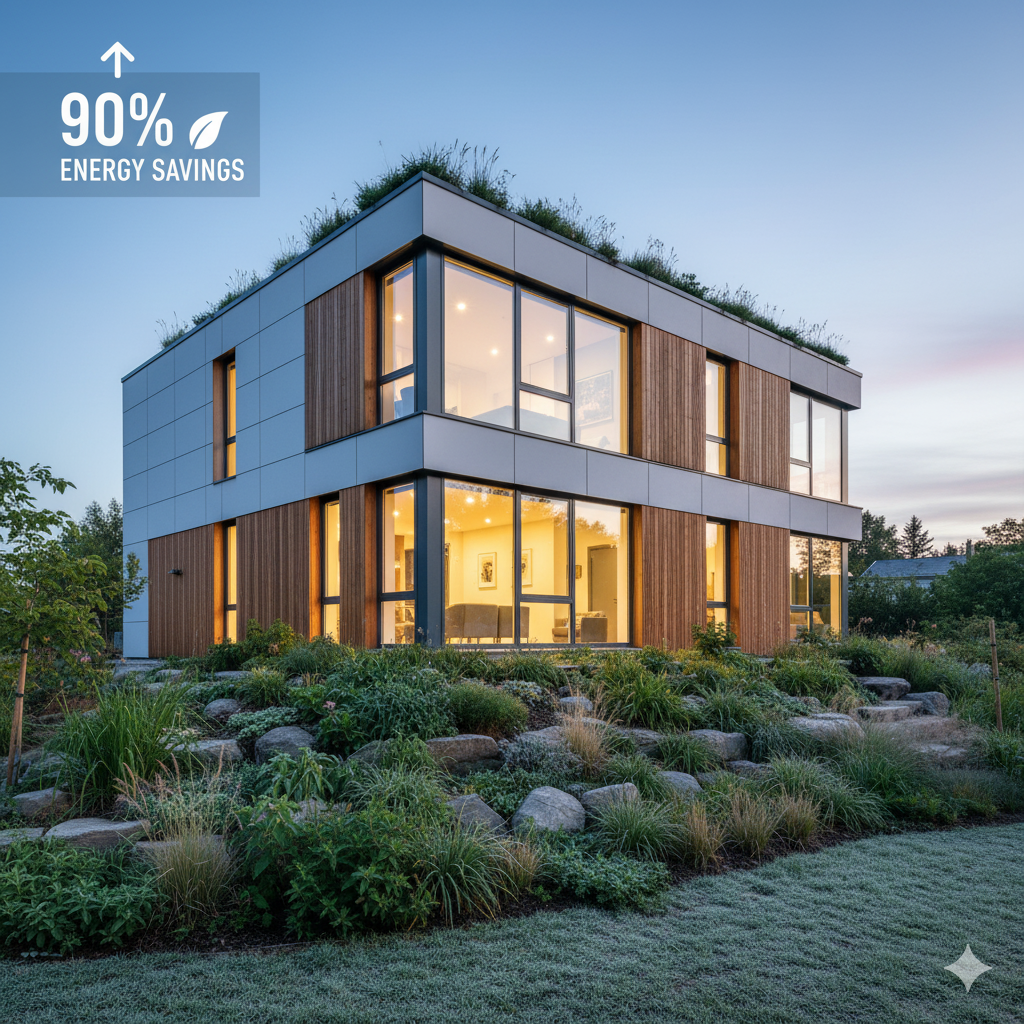
This is, understandably, the primary driver for many considering passive house. Buildings constructed to the passive house standard typically consume 75-90% less energy for heating and cooling compared to conventional new builds. For existing homes, a passive house retrofit can lead to even more dramatic savings.
Imagine annual heating bills that are a mere fraction of what they once were, or even negligible. This profound reduction in operational energy translates directly into significant long-term financial savings and protection against rising energy costs. Furthermore, it significantly lowers the building’s carbon footprint, contributing directly to climate change mitigation.
2. Superior Indoor Air Quality
Thanks to the continuous mechanical ventilation with heat recovery, passive houses boast exceptional indoor air quality. The HRV/ERV system constantly filters incoming air, removing pollen, dust, and other allergens, making it a boon for allergy and asthma sufferers. Simultaneously, it exhausts stale air, odors, and indoor pollutants (VOCs, CO2, excess humidity) that can build up in airtight conventional homes. The result is a consistently fresh, healthy, and odor-free indoor environment.
3. Unparalleled Comfort
One of the most praised aspects of living in a passive house is the incredible level of comfort. The combination of super-insulation, thermal bridge-free design, and high-performance windows ensures that interior surface temperatures are remarkably consistent. There are no cold spots near windows or exterior walls, no drafts, and stable temperatures throughout the home. This creates a remarkably serene and uniform thermal environment that is simply not achievable in most conventional buildings.
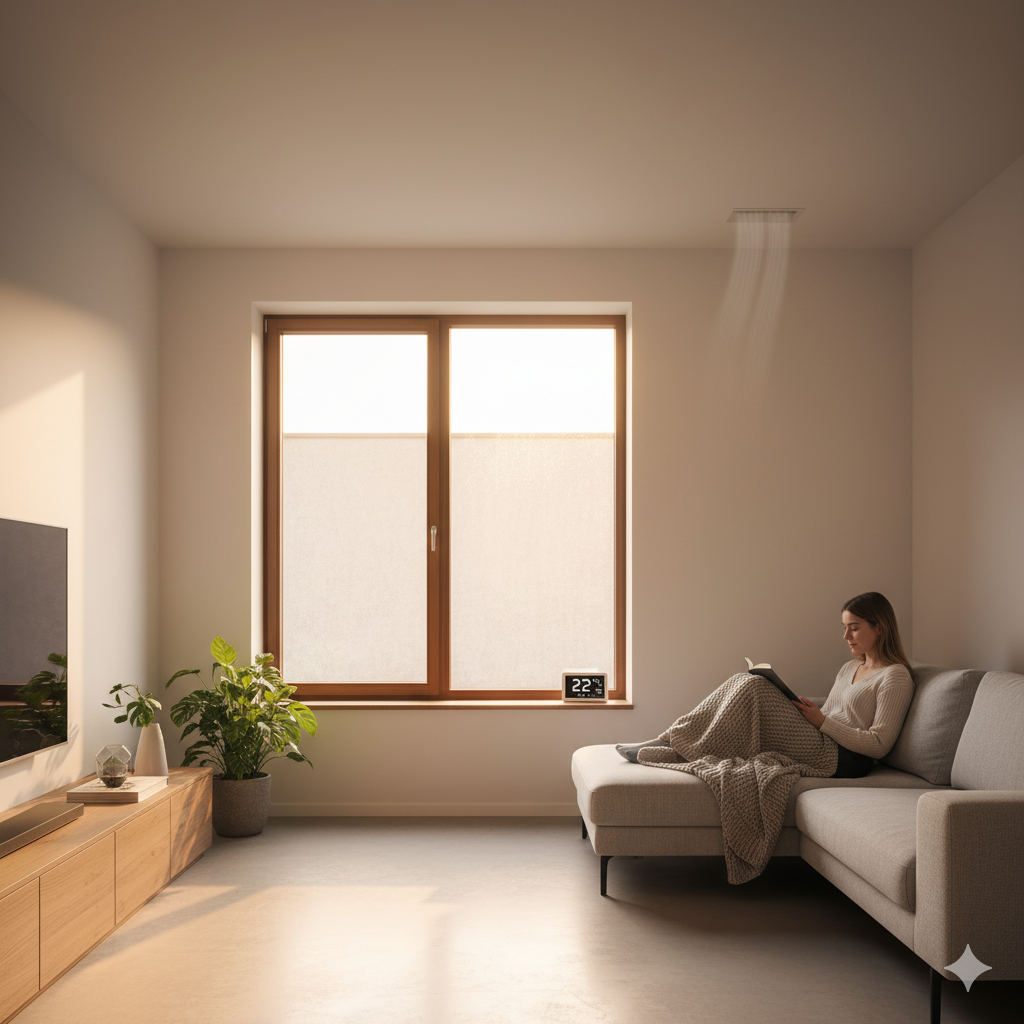
Alt Text: A woman relaxing on a sofa in a modern, comfortable living room with soft lighting, next to a large wooden window. A digital thermostat on the wall shows 22 degrees Celsius, and a subtle air vent in the ceiling indicates controlled ventilation in a passive house.
4. Quiet Interiors
The robust, airtight, and heavily insulated envelope of a passive house also acts as an excellent sound barrier. This significantly reduces noise pollution from outside, creating exceptionally quiet and peaceful interiors. Whether you live near a busy road, an airport, or simply have noisy neighbors, the tranquility afforded by a passive house is a highly valued benefit.
5. Durability and Longevity
The meticulous design and construction practices required for passive house certification often lead to a more durable and robust building. The focus on airtightness and thermal bridge elimination also minimizes the risk of moisture infiltration and condensation within wall assemblies, which can lead to mold, rot, and structural damage in conventional buildings. This careful attention to detail results in a building that is designed to last longer and require less maintenance over its lifespan.
6. Resilience
In an age of increasing climate volatility and energy grid instability, passive houses offer remarkable resilience. Their inherent energy efficiency means they are far less susceptible to power outages. Even without power, they maintain comfortable interior temperatures for extended periods compared to conventional homes, acting as a natural shelter during extreme weather events. This makes them safer and more reliable places to live.
7. Reduced Environmental Impact
By drastically cutting heating and cooling demands, passive houses significantly reduce greenhouse gas emissions associated with building operation. Furthermore, the focus on durability and often, the selection of sustainable materials, contributes to a lower embodied energy over the building’s lifecycle. This commitment to reducing the environmental footprint at every stage aligns perfectly with broader sustainability goals.
8. Potential for Net-Zero or Plus-Energy Buildings
While passive house design itself focuses on energy demand reduction, its ultra-low energy consumption makes it an ideal platform for achieving net-zero or even “plus-energy” status. By integrating a modest renewable energy system (like solar panels) into a passive house, it’s relatively easy to generate as much energy as the building consumes annually, or even more, exporting surplus energy back to the grid. This synergy makes passive house a foundational step towards truly regenerative buildings.
The Path to a Passive House: Key Considerations and Steps
Embarking on a passive house project, whether new construction or a deep retrofit, requires careful planning, a knowledgeable team, and a commitment to quality.
1. Find a Certified Passive House Designer/Consultant
This is arguably the most crucial step. Passive house design is a specialized field. Working with an architect, designer, or consultant who is certified by the Passive House Institute (PHI) or Passive House Institute US (PHIUS) ensures they have the expertise and experience to guide your project through the rigorous process. They will understand the performance targets, detailing requirements, and the necessary tools (like the Passive House Planning Package – PHPP software) to accurately model and optimize your building’s energy performance.
2. Assemble an Experienced Construction Team
Building a passive house demands a higher level of precision and attention to detail than conventional construction. It’s essential to work with builders and tradespeople (carpenters, HVAC installers, window installers) who are either experienced in passive house projects or are committed to learning and adhering to the strict quality control required. Training and communication among the team are paramount.
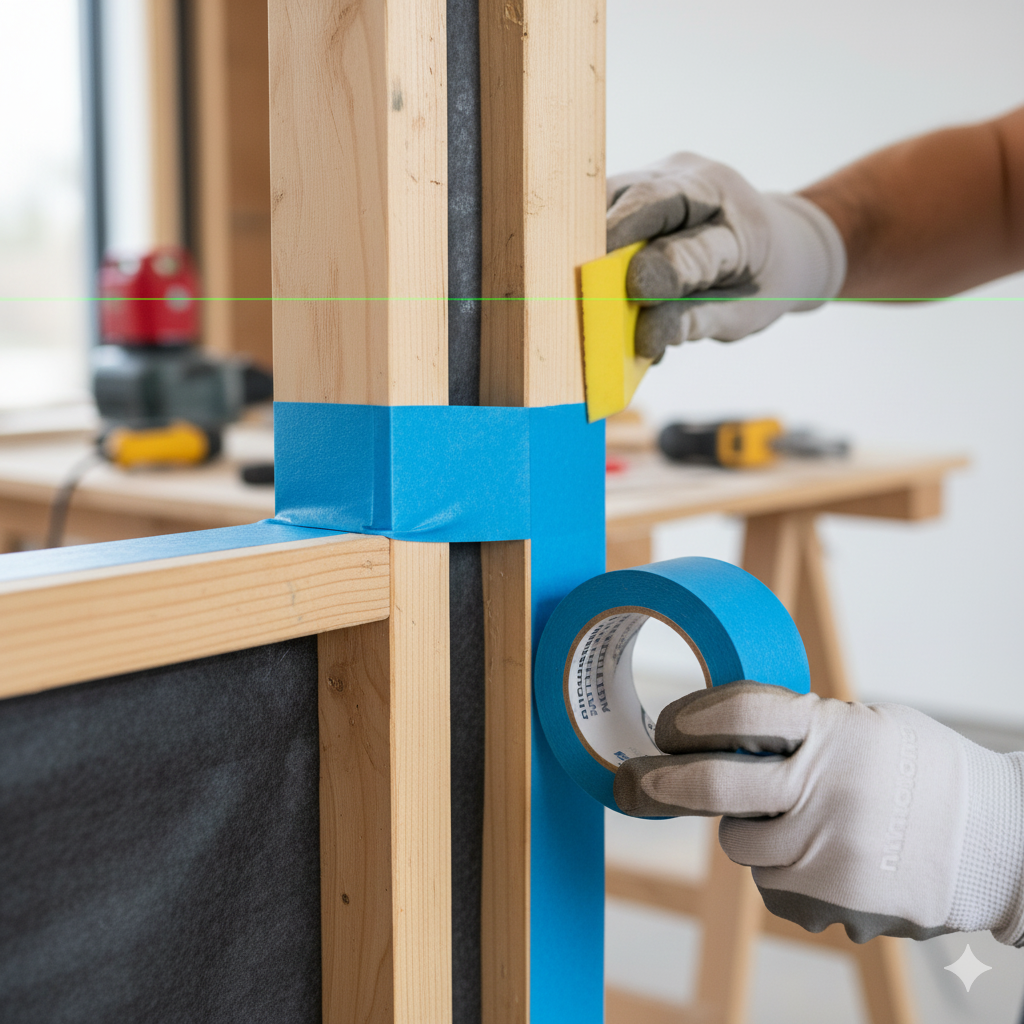
Alt Text: Close-up of a worker’s gloved hands applying blue airtight sealing tape to the corner of a wooden wall frame during passive house construction, emphasizing meticulous sealing techniques.
3. Optimize Orientation and Form
Before even drawing detailed plans, consider the site and the building’s orientation. Maximizing south-facing windows (in the Northern Hemisphere) for passive solar gain in winter, while strategically placing smaller windows on other facades and incorporating shading for summer, is a fundamental passive strategy. A compact building form generally has a smaller surface-area-to-volume ratio, which reduces heat loss/gain and is more efficient.
4. Material Selection
While passive house is performance-based, material choices play a role. Focus on materials that contribute to insulation (e.g., cellulose, mineral wool, wood fiberboard), airtightness (membranes, tapes, sealants), and durability. Consider the embodied energy of materials and prioritize locally sourced, recycled, or rapidly renewable options where possible to further enhance the sustainability of your sustainable architecture project.
5. Early Planning for MEP Systems
Mechanical, electrical, and plumbing (MEP) systems need to be integrated into the passive house design from the outset. Ducts for the HRV/ERV, wiring, and plumbing penetrations must be carefully planned to maintain airtightness and thermal bridge-free construction. Small, efficient heating/cooling systems are typically all that’s needed, often integrated with the ventilation system.
6. Rigorous Quality Control and Testing
Throughout construction, quality control is paramount. This includes:
- Blower door tests: Essential for identifying and sealing air leaks. Multiple tests (e.g., after framing, after airtight layer installation, at completion) are recommended.
- Thermal imaging: Can reveal areas of missing insulation or thermal bridges.
- On-site inspections: To ensure correct installation of insulation, windows, and airtightness layers.
Certification by PHI or PHIUS provides an independent verification that the building meets the stringent passive house standard, offering peace of mind and validating the effort.
Passive House Deep Energy Retrofits: Transforming Existing Homes
Passive house principles are not limited to new construction. Deep energy retrofits applying the same standards can dramatically transform existing, energy-inefficient buildings into high-performance, comfortable, and sustainable homes. This is a crucial strategy for reducing the carbon footprint of the existing building stock.
A passive house retrofit typically involves:
- Adding substantial exterior insulation: Often wrapping the entire existing structure.
- Upgrading to high-performance windows and doors: Replacing old, leaky units.
- Improving airtightness: Meticulously sealing the existing envelope.
- Installing an HRV/ERV system: To manage indoor air quality in the now-airtight home.
- Minimizing thermal bridges: Addressing existing connections and structural elements.
While often more complex than new builds due to the challenges of working with existing structures, passive house retrofits offer immense potential for revitalization and a significant contribution to energy efficient homes and green building efforts.
The Future is Passive: Embracing a Sustainable Building Standard
As the world grapples with climate change, energy security, and the rising cost of living, the imperative for energy efficient homes has never been stronger. Passive house design offers a robust, proven, and holistic solution. It transcends mere compliance with minimum building codes, setting a higher bar for performance and providing occupants with undeniable benefits in terms of comfort, health, and reduced operating costs.
The initial investment for a passive house can be slightly higher than conventional construction, primarily due to the increased insulation, high-performance windows, and the meticulous labor required for airtightness. However, these upfront costs are often offset by reduced or eliminated expenses for large, complex HVAC systems, and are rapidly recouped through drastically lower energy bills. Furthermore, the long-term benefits of enhanced durability, resilience, and increased property value solidify its position as a wise and sustainable investment in sustainable architecture.
Passive house design is more than a building standard; it’s a movement towards a more responsible, comfortable, and sustainable built environment. By embracing its principles, we can construct buildings that are not only beautiful and functional but also profoundly efficient, resilient, and in harmony with our planet. The ultimate energy efficiency guide to building a better future starts here.
Frequently Asked Questions (FAQ) about Passive House Design
Is passive house design only for cold climates?
No! While originally developed in a cold climate, passive house principles are applicable and beneficial in all climates, from hot and humid to temperate. The principles adapt; for example, in hot climates, the focus shifts to minimizing solar heat gain and maximizing cooling efficiency, but the core elements of super-insulation, airtightness, and heat recovery ventilation remain critical.
Are passive houses expensive to build?
The upfront cost of a certified passive house can be 5-15% higher than conventional construction, depending on local market conditions and the complexity of the design. However, this extra investment is typically offset by smaller, simpler heating/cooling systems, and quickly recouped through drastically reduced energy bills (often 75-90% less for heating and cooling). Considering the superior comfort, durability, and long-term savings, many find it a worthwhile investment in green building.
Do passive houses need active heating/cooling systems at all?
Yes, most passive houses still require a small, highly efficient heating and cooling system. The goal is to minimize the demand for heating and cooling, not eliminate it entirely. Often, a small heat pump integrated with the ventilation system is sufficient to provide the minimal additional conditioning needed to maintain optimal comfort.
How does airtightness affect indoor air quality? Will it feel stuffy?
Airtightness improves indoor air quality. Because the building is so tight, uncontrolled air leaks are eliminated. Instead of relying on random cracks, a controlled mechanical ventilation system (HRV/ERV) continuously brings in fresh, filtered air and exhausts stale air, recovering heat in the process. This ensures a constant supply of clean air without drafts, preventing stuffiness and removing pollutants much more effectively than conventional homes.
What’s the difference between Passive House and Net-Zero?
Passive House is a standard for dramatically reducing a building’s energy demand for heating and cooling. Net-Zero means a building generates as much energy as it consumes annually, usually through renewable energy sources like solar panels. A passive house makes achieving net-zero much easier and more cost-effective because its energy demand is already so low, requiring fewer solar panels or other renewable systems. Passive house is a fantastic foundation for a net-zero home.
Can an existing home be converted into a passive house?
Yes, it’s called a deep energy retrofit. While more challenging than new construction, many existing homes have been successfully retrofitted to passive house standards. This typically involves significant upgrades to insulation, windows, airtightness, and the installation of an HRV/ERV system. It’s a highly effective way to transform an old, inefficient building into a high-performance, comfortable, and sustainable home.
How long does a passive house last?
Due to the meticulous design, high-quality materials, and rigorous construction methods, passive houses are generally built to be exceptionally durable and long-lasting. The focus on eliminating thermal bridges and ensuring airtightness also helps prevent moisture-related issues like mold and rot, contributing to a longer lifespan and lower maintenance requirements compared to conventional construction.