Table of Contents
- 1. Green Roofs and Walls: Harnessing Nature’s Cooling Power
- 2. Cool Pavements and Reflective Surfaces: Bouncing Back the Heat
- 3. High Albedo Materials for Building Envelopes: Lightening the Load
- 4. Increasing Urban Tree Canopy and Green Spaces: Nature’s Air Conditioners
- 5. Optimized Urban Geometry and Layout: Shaping the City for Coolness
- 6. Passive Cooling Strategies in Building Design: Reducing Internal Heat Gain
- 7. Water Features and Permeable Surfaces: Integrating Hydrological Cooling
- FAQ: Urban Heat Island Effect and Architectural Solutions
The Urban Heat Island Effect is a phenomenon where urban areas experience higher temperatures than outlying rural areas. This temperature difference is primarily due to the extensive use of heat-absorbing materials like concrete and asphalt, reduced vegetation, and heat generated by human activities such as industrial processes and transportation. As our cities continue to expand and global temperatures rise, mitigating the Urban Heat Island Effect has become an urgent priority for architects, urban planners, and policymakers worldwide.
The implications of higher urban temperatures are far-reaching, affecting public health, energy consumption, air quality, and overall urban liveability. From increased heat-related illnesses and mortality during heatwaves to a surge in demand for air conditioning, leading to higher greenhouse gas emissions, the negative feedback loop is clear. This comprehensive guide will delve into seven crucial architectural and urban planning solutions that can effectively combat this challenge, fostering cooler, healthier, and more sustainable urban environments.
Understanding the root causes of the Urban Heat Island Effect is the first step toward devising effective solutions. Urban surfaces, such as roads, buildings, and other infrastructure, absorb and store more solar radiation than natural landscapes. This absorbed heat is then slowly released, particularly at night, leading to elevated ambient temperatures. The lack of evapotranspiration from vegetation, which naturally cools the air, further exacerbates the effect. Furthermore, the geometric configuration of urban canyons (streets flanked by tall buildings) can trap heat and reduce airflow, hindering natural cooling processes.
The cumulative impact of these factors creates a microclimate within cities that is significantly warmer than surrounding areas, often by several degrees Celsius. This temperature differential can have profound consequences, especially for vulnerable populations, and can place immense strain on urban infrastructure and energy grids. Addressing this multifaceted problem requires a holistic approach that integrates innovative architectural design with strategic urban planning, considering both individual building interventions and broader city-scale strategies.
1. Green Roofs and Walls: Harnessing Nature’s Cooling Power
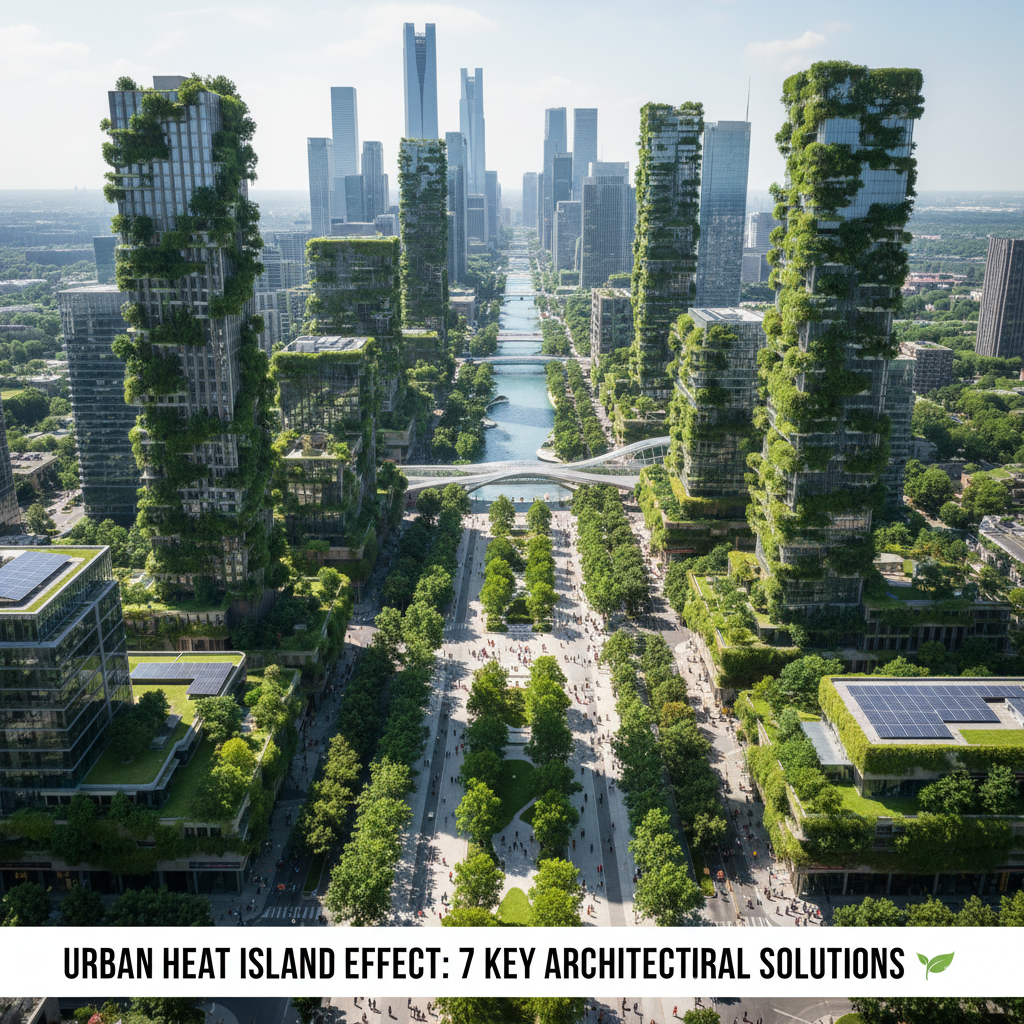
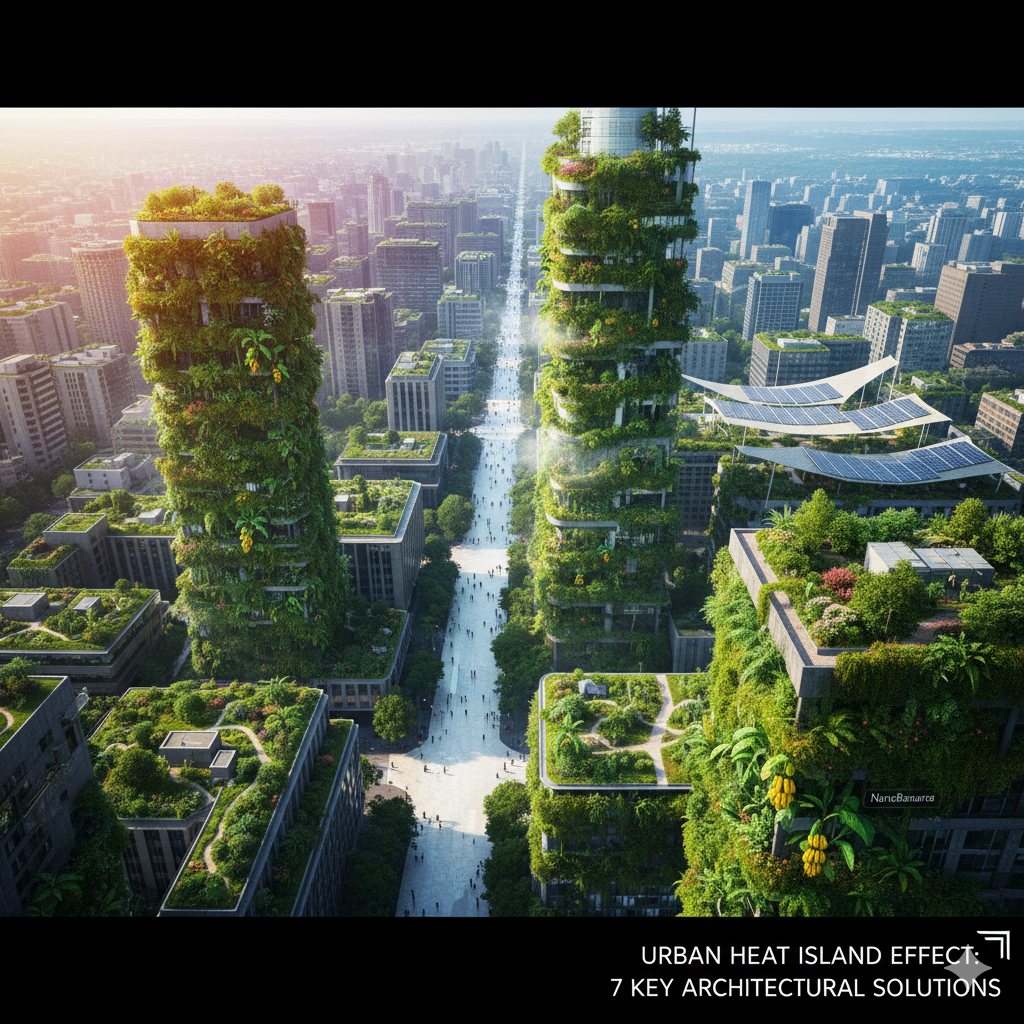
One of the most effective and aesthetically pleasing architectural solutions to the Urban Heat Island Effect is the widespread adoption of green roofs and walls. These living surfaces involve covering roofs and building facades with vegetation, ranging from simple sedum mats to complex gardens with diverse plant species. The benefits are multifold.
Green Roofs: Green roofs work primarily through two mechanisms: shading and evapotranspiration. The plants and growing medium provide a layer of insulation, significantly reducing the amount of solar radiation absorbed by the roof surface. This directly lowers the interior temperature of the building, thereby reducing the need for air conditioning. More importantly, the process of evapotranspiration—where plants release water vapor into the atmosphere—has a powerful cooling effect on the surrounding air. Just as sweating cools the human body, plants “sweat” to cool themselves and their environment.
Studies have shown that green roofs can reduce roof surface temperatures by 20-40°C compared to conventional dark roofs, and ambient air temperatures above them can be several degrees cooler. Beyond their thermal benefits, green roofs also offer ecological advantages, such as improved stormwater management by absorbing rainfall, enhanced biodiversity by providing habitats for insects and birds, and improved air quality by filtering pollutants. They can also extend the lifespan of roofing membranes by protecting them from UV radiation and extreme temperature fluctuations.
Green Walls (Vertical Gardens): Similar to green roofs, green walls involve cultivating vegetation on the exterior surfaces of buildings. These can be “living walls” with plants growing in a specialized vertical growing medium or “facade greening” where climbing plants grow directly on the building structure. Green walls provide excellent shading for building facades, reducing solar heat gain through windows and walls. They also contribute to evaporative cooling and insulation, especially when dense. In urban canyons, green walls can significantly contribute to cooling the street-level environment, making pedestrian areas more comfortable.
They also enhance the aesthetic appeal of buildings, introduce greenery into dense urban environments, and can even act as sound barriers, reducing noise pollution. The choice between different types of green walls depends on factors such as structural capacity, maintenance requirements, and the desired aesthetic. Both green roofs and walls represent a vital strategy for integrating nature into the built environment, actively combating the Urban Heat Island Effect while simultaneously delivering a host of co-benefits that enhance urban resilience and quality of life.
2. Cool Pavements and Reflective Surfaces: Bouncing Back the Heat
The vast expanse of urban surfaces, particularly roads, sidewalks, and parking lots, plays a significant role in the Urban Heat Island Effect. Traditional dark-colored pavements, typically made of asphalt, absorb a large percentage of solar radiation, leading to exceptionally high surface temperatures and subsequently heating the ambient air. The solution lies in the adoption of cool pavements and highly reflective surface materials.
Cool Pavements: Cool pavements are designed to reflect more solar radiation and absorb less heat than conventional pavements. This can be achieved through various technologies:
- Highly Reflective Materials: Using lighter-colored aggregates or adding reflective coatings to asphalt or concrete can significantly increase their solar reflectivity (albedo). A higher albedo means less heat absorption.
- Permeable Pavements: These materials, such as permeable concrete or pavers with gaps filled with vegetation or gravel, allow water to infiltrate the ground rather than running off. This water can then evaporate, contributing to evaporative cooling. While their primary function is stormwater management, the moisture content and increased surface area for evaporation can contribute to lower surface temperatures.
- Cool Sealants and Coatings: Applying specialized cool sealants or coatings to existing dark pavements can effectively transform them into more reflective surfaces without requiring complete reconstruction. These coatings often contain reflective pigments that scatter sunlight.
The impact of cool pavements can be substantial. Studies have demonstrated that cool pavements can reduce surface temperatures by 10-20°C and lower ambient air temperatures by 1-2°C, particularly during peak summer hours. This not only makes urban areas more comfortable for pedestrians and reduces energy consumption from air conditioning in nearby buildings but also contributes to better air quality by reducing the formation of ground-level ozone, which is accelerated by heat. Implementing cool pavements on a large scale across a city’s road network, parking lots, and public squares can have a profound cumulative effect on mitigating the Urban Heat Island Effect, transforming vast heat-absorbing surfaces into cooler, more environmentally friendly elements of the urban landscape.
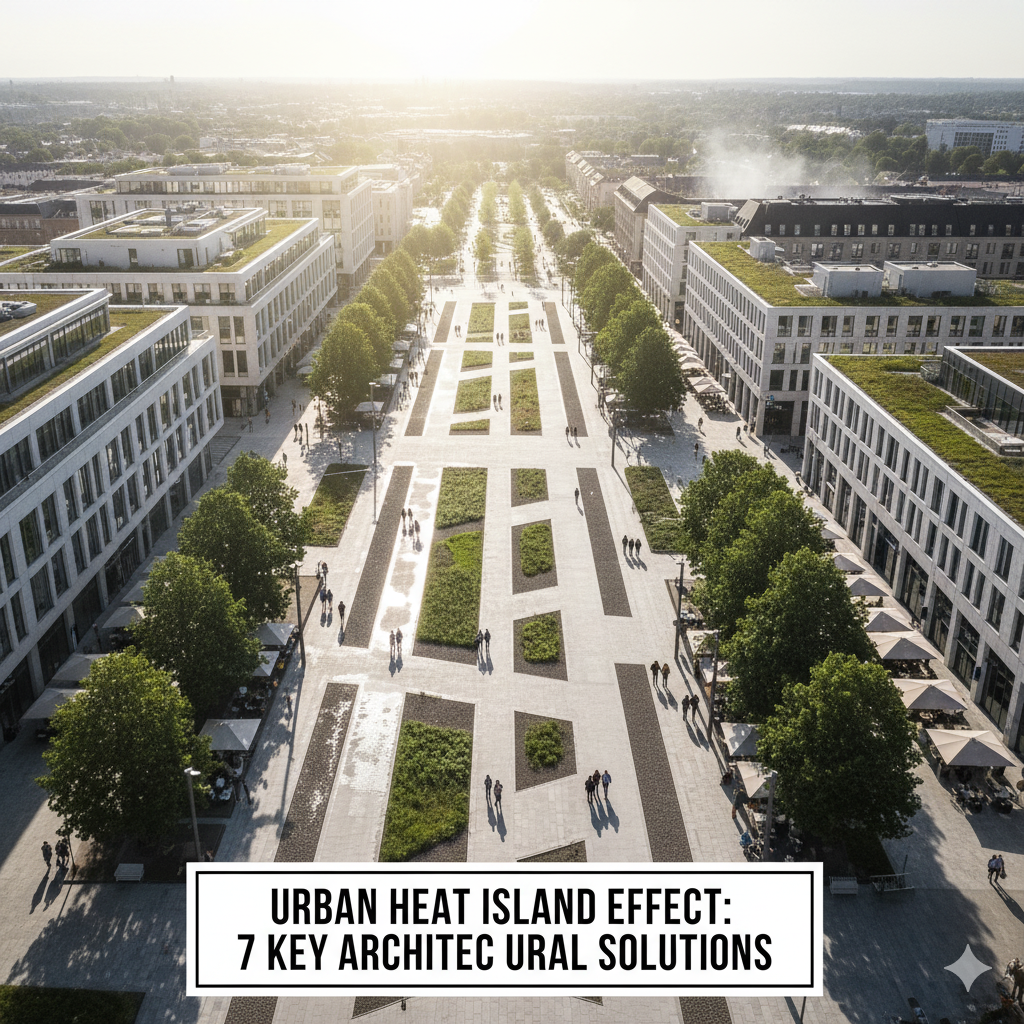
3. High Albedo Materials for Building Envelopes: Lightening the Load
Just as dark pavements absorb heat, dark-colored building facades and roofs significantly contribute to the Urban Heat Island Effect. High albedo materials, often referred to as “cool materials,” are designed to reflect a large portion of solar radiation rather than absorbing it. Integrating these materials into building envelopes is a straightforward yet highly effective architectural solution.
Cool Roofs: Cool roofs are arguably the most impactful application of high albedo materials on buildings. A cool roof uses materials that are highly reflective and highly emissive (meaning they release absorbed heat quickly). This can include:
- White or Light-Colored Coatings: Applying special white or light-colored, reflective coatings over existing dark roof membranes is a common and cost-effective method. These coatings are formulated to withstand UV degradation and maintain their reflectivity over time.
- Highly Reflective Membranes: New roofing membranes made from materials like TPO (Thermoplastic Polyolefin) or PVC (Polyvinyl Chloride) are naturally light-colored and designed for high solar reflectivity.
- Green Roofs (revisited): As discussed, green roofs are also a type of cool roof, as the vegetation provides excellent shading and evaporative cooling.
The benefits of cool roofs are substantial. They can reduce roof surface temperatures by 15-30°C compared to conventional dark roofs, directly lowering heat gain into the building’s interior. This translates to significant reductions in air conditioning demand (estimated at 10-30% for commercial buildings) and associated energy costs. Reduced energy consumption not only saves money but also decreases greenhouse gas emissions, contributing to climate change mitigation. Furthermore, lower roof temperatures reduce thermal stress on roofing materials, extending their lifespan. On a city-wide scale, widespread adoption of cool roofs can contribute to a measurable reduction in ambient air temperatures, directly addressing the Urban Heat Island Effect.
Cool Walls and Facades: While less intensely exposed to direct overhead sun than roofs, building facades also absorb considerable solar radiation. Incorporating high albedo or reflective materials into wall cladding can also contribute to cooling. This can involve:
- Light-Colored Paints and Finishes: Using light-colored, reflective paints or renders for exterior walls.
- Reflective Cladding Materials: Materials like light-colored bricks, tiles, or specialized reflective panels can be used as cladding.
- Ventilated Facades: These systems create an air gap between the outer cladding and the building’s insulation layer, allowing for natural convection to dissipate heat before it enters the building. While not strictly high albedo, they effectively prevent heat gain.
By strategically selecting and applying high albedo materials across building envelopes, architects can transform buildings from heat contributors into heat reflectors, playing a crucial role in mitigating the Urban Heat Island Effect and creating cooler, more energy-efficient urban environments. This approach aligns perfectly with principles of sustainable architecture and passive design.
4. Increasing Urban Tree Canopy and Green Spaces: Nature’s Air Conditioners
Perhaps the most intuitive and naturally effective solution to the Urban Heat Island Effect is the expansion of urban tree canopy and the creation of more green spaces. Trees and vegetation are nature’s air conditioners, providing cooling through a combination of shading and evapotranspiration.
Shading: Trees cast shadows on buildings, streets, and other urban surfaces, directly preventing solar radiation from hitting and heating these surfaces. A single mature tree can significantly reduce the temperature of the area beneath its canopy by several degrees Celsius. Strategically placed trees can shade building facades and roofs, reducing internal heat gain and lowering air conditioning demand. Shaded sidewalks and public spaces also make urban environments much more comfortable and inviting for pedestrians, encouraging outdoor activity even during warmer months. The denser the tree canopy, the more pronounced this shading effect becomes, especially during the hottest parts of the day.
Evapotranspiration: Beyond shading, trees and other plants cool the air through evapotranspiration. This biological process involves plants absorbing water through their roots and then releasing it as water vapor through their leaves. As water evaporates, it draws heat from the surrounding air, effectively cooling it. This is a highly efficient natural cooling mechanism. A large urban forest or park can significantly lower ambient temperatures through this process, creating “cool islands” within the broader urban heat island. The collective effect of numerous trees and green spaces can have a measurable impact on city-wide temperatures.
Strategic Urban Planning for Green Infrastructure: Increasing urban tree canopy requires a concerted effort in urban planning and design. This includes:
- Street Tree Planting: Integrating tree-lined streets into new developments and retrofitting existing ones. Selecting appropriate tree species that are drought-tolerant, resilient to urban conditions, and provide dense canopy cover is crucial.
- Expanding Parks and Green Spaces: Creating new parks, community gardens, and naturalized areas. Maximizing the permeable surfaces within these spaces to allow for healthy plant growth and water infiltration.
- Connecting Green Corridors: Establishing green corridors that link parks and natural areas, allowing for greater ecological connectivity and broader cooling effects.
- Prioritizing Tree Protection: Implementing policies to protect existing mature trees during construction and development.
- Integrating Greenery in Built Form: As discussed with green roofs and walls, finding innovative ways to incorporate vegetation directly onto buildings.
The benefits of urban greenery extend far beyond mitigating the Urban Heat Island Effect. They include improved air quality (filtering pollutants, producing oxygen), enhanced biodiversity, better stormwater management, noise reduction, and significant positive impacts on mental health and well-being for urban residents. Investing in urban forests and green infrastructure is a fundamental strategy for creating more resilient, liveable, and sustainable cities in the face of climate change.
5. Optimized Urban Geometry and Layout: Shaping the City for Coolness
The physical layout and geometry of urban areas significantly influence airflow, solar exposure, and heat trapping, thereby impacting the Urban Heat Island Effect. Thoughtful urban planning and architectural design can optimize these factors to promote natural cooling.
Street Canyon Design: The width and height of streets and buildings create “street canyons.” In traditional urban planning, these canyons can trap heat and block natural breezes. However, careful design can turn them into assets:
- Optimizing Aspect Ratios: The ratio of building height to street width (H/W ratio) influences airflow and solar penetration. Taller buildings on narrower streets can increase shading, especially on east-west oriented streets. However, excessively narrow canyons can also trap pollutants and reduce air circulation. An optimal balance is needed, often considering local wind patterns.
- Orientation: Orienting streets and buildings to align with prevailing summer breezes can enhance natural ventilation, helping to flush out hot air from urban canyons.
- Integrating Greenery: Incorporating trees and green infrastructure within street canyons further enhances their cooling potential through shading and evapotranspiration.
Building Spacing and Orientation: The arrangement of buildings on a larger scale also plays a role.
- Strategic Spacing: Ensuring adequate spacing between buildings can allow for better air circulation and reduce the incidence of heat being re-radiated between close-set structures. However, this must be balanced with urban density goals.
- Building Orientation for Solar Control: Designing buildings with their longest facades facing north-south (in the northern hemisphere) can minimize exposure to the intense east and west sun, reducing overall heat gain. Architects can also use façade elements like fins, louvers, or balconies to shade windows and walls from direct sunlight.
Open Spaces and Air Movement Corridors: Creating large, open green spaces and strategically located air movement corridors can significantly improve urban ventilation and reduce the Urban Heat Island Effect.
- Ventilation Paths: Identifying and preserving natural wind corridors, or designing new ones, allows cooler air from surrounding rural areas or bodies of water to penetrate urban centers, helping to dissipate heat. These corridors can be green spaces, wide avenues, or even carefully designed building arrangements.
- Water Bodies: Incorporating natural or artificial water bodies (e.g., rivers, canals, large fountains) within urban areas can provide significant evaporative cooling effects, especially when combined with green spaces. The cooler air generated around water bodies can then be channeled through urban areas.
Effective urban geometry and layout require a deep understanding of local climate, wind patterns, and solar paths. By integrating these considerations into the master planning and architectural design stages, cities can be shaped to inherently promote natural cooling, reducing their susceptibility to the Urban Heat Island Effect and enhancing overall climate resilience. This holistic approach is key to creating truly sustainable urban environments.
6. Passive Cooling Strategies in Building Design: Reducing Internal Heat Gain
While the previous solutions focus on external urban conditions, passive cooling strategies address the Urban Heat Island Effect by minimizing heat gain within individual buildings and maximizing natural cooling, thereby reducing reliance on energy-intensive air conditioning. This is a cornerstone of sustainable architecture.
Natural Ventilation: Designing buildings to maximize natural airflow can significantly reduce internal temperatures.
- Cross-Ventilation: Placing windows and openings on opposite sides of a building allows air to flow through and flush out heat.
- Stack Ventilation (Chimney Effect): Utilizing vertical shafts or atriums to create a pressure differential, drawing cooler air in at lower levels and expelling warmer air through higher openings.
- Wind Catchers/Towers: Traditional and modern architectural elements designed to capture prevailing winds and direct them into building interiors.
Shading Devices: External shading is crucial for preventing solar radiation from entering buildings.
- Overhangs and Louvers: Horizontal overhangs shade windows from high-angle summer sun, while vertical louvers are effective against low-angle morning and afternoon sun.
- Brise Soleils: Architectural features that act as sun breakers, often integrated into the facade design.
- Vegetation: Trees, climbing plants, and green walls can provide dynamic and aesthetic external shading for facades.
High-Performance Glazing and Insulation: The building envelope plays a critical role in mediating heat transfer.
- Low-E Glass: Low-emissivity (Low-E) coatings on windows reflect solar heat while allowing visible light to pass through, significantly reducing heat gain.
- Double or Triple Glazing: Multiple panes of glass with air or inert gas in between provide enhanced insulation, limiting heat transfer.
- Effective Insulation: Well-insulated walls, roofs, and floors minimize heat conduction from the exterior to the interior. This is particularly important for reducing heat gain during hot periods and retaining heat during cooler periods.
Thermal Mass: Materials with high thermal mass (e.g., concrete, stone, brick) can absorb and store heat during the day and release it slowly at night.
- Exposed Thermal Mass: In climates with significant diurnal temperature swings, exposing thermal mass on the interior can absorb daytime heat, keeping interiors cooler, and then release it at night when temperatures drop. This “night purging” can pre-cool the building for the next day. This strategy must be carefully designed for specific climates to be effective.
By integrating these passive cooling techniques, architects can design buildings that naturally stay cooler, dramatically reducing their contribution to the Urban Heat Island Effect through lower energy demand for air conditioning. This approach not only creates more comfortable indoor environments but also fosters greater energy independence and environmental responsibility within urban settings.
7. Water Features and Permeable Surfaces: Integrating Hydrological Cooling
The presence of water within urban environments offers a significant, yet often underutilized, strategy for mitigating the Urban Heat Island Effect. Water features and permeable surfaces contribute to cooling through evaporation and by moderating surface temperatures.
Evaporative Cooling from Water Features: Large bodies of water like rivers, lakes, and canals naturally create cooler microclimates due to the continuous process of evaporation. This process absorbs latent heat from the surroundings, lowering the ambient air temperature.
- Urban Water Bodies: Integrating new or enhancing existing rivers, canals, and ponds within city limits can provide substantial cooling. The cooler air from these areas can then be channeled into urban spaces.
- Fountains and Mists: Decorative fountains, splash pads, and misting systems in public squares can offer localized cooling, making these spaces more comfortable for pedestrians during hot weather. The smaller water droplets from mists expose a larger surface area for evaporation, maximizing the cooling effect.
- Reflecting Pools: While their primary function is often aesthetic, large, shallow reflecting pools can also contribute to evaporative cooling.
Permeable Surfaces and Water Retention: Traditional urban surfaces are largely impervious, preventing rainwater from infiltrating the ground. This leads to rapid runoff and deprives the urban environment of the natural cooling that comes from soil moisture and plant uptake.
- Permeable Pavements (revisited): As mentioned earlier, permeable pavements allow water to seep into the ground. This retained moisture can then evaporate from the soil and from the surfaces of surrounding plants, providing a continuous cooling effect.
- Rain Gardens and Bioswales: These are specially designed depressions planted with vegetation that collect and filter stormwater runoff, allowing it to slowly infiltrate the ground. By retaining water, they support plant growth and contribute to evaporative cooling.
- Urban Wetlands: Creating or restoring small urban wetlands can mimic natural hydrological processes, providing significant cooling benefits and supporting biodiversity.
The integration of water features and permeable surfaces not only helps combat the Urban Heat Island Effect but also offers numerous other benefits. These include improved stormwater management (reducing flood risk, recharging groundwater), enhanced urban aesthetics, creation of recreational opportunities, and support for urban biodiversity. By restoring natural water cycles and leveraging the cooling power of water, architects and urban planners can design cities that are more resilient, environmentally sound, and intrinsically cooler. This holistic approach to urban hydrology is a critical component of climate-responsive design.
The Urban Heat Island Effect presents a formidable challenge to the sustainability and liveability of our cities. However, as this exploration demonstrates, a diverse array of architectural and urban planning solutions stands ready to combat this phenomenon. From the verdant embrace of green roofs and walls to the reflective power of cool pavements and building materials, and from the ecological generosity of urban tree canopies to the innovative deployment of passive cooling strategies and integrated water features, each solution plays a vital role.
The key to effectively mitigating the Urban Heat Island Effect lies in a comprehensive, integrated approach. No single solution can fully address the complexity of urban heat. Instead, a synergistic combination of these seven strategies, tailored to specific local climates and urban contexts, is required. Architects, urban planners, policymakers, and communities must collaborate to implement these solutions at both the building and city scales. This means revising building codes to encourage cool materials, investing in green infrastructure, promoting sustainable development practices, and educating the public about the benefits of a cooler city.
As global temperatures continue to rise, the urgency of addressing the Urban Heat Island Effect intensifies. By embracing sustainable architecture and forward-thinking urban design, we can transform our cities from heat sinks into cool, comfortable, and resilient environments. The commitment to these architectural solutions is not just about reducing temperatures; it’s about fostering healthier populations, reducing energy consumption, enhancing biodiversity, and ultimately creating more liveable and sustainable urban futures for generations to come. The effort to cool our cities is an investment in our collective well-being and in the ecological health of our planet.
FAQ: Urban Heat Island Effect and Architectural Solutions
What exactly is the Urban Heat Island Effect?
The Urban Heat Island Effect is a phenomenon where urban areas experience significantly warmer temperatures than surrounding rural areas. This is primarily caused by heat-absorbing materials like concrete and asphalt, lack of vegetation, and heat generated by human activities in cities.
How do green roofs and walls help combat the Urban Heat Island Effect?
Green roofs and walls cool buildings and the surrounding air through two main mechanisms: shading (reducing solar heat absorption) and evapotranspiration (plants releasing water vapor, which cools the air). They also provide insulation, reduce energy consumption, and enhance biodiversity.
What are “cool pavements” and why are they important?
Cool pavements are surfaces designed to reflect more solar radiation and absorb less heat than traditional dark pavements. They are important because traditional dark roads and sidewalks contribute significantly to urban heat. Cool pavements reduce surface temperatures, lower ambient air temperatures, and improve air quality.
How do high albedo materials contribute to mitigating urban heat?
High albedo materials are light-colored and highly reflective, meaning they bounce back a large portion of sunlight rather than absorbing it. When used on roofs and building facades, they significantly reduce solar heat gain into buildings, lowering interior temperatures and decreasing the need for air conditioning.
What role do urban trees and green spaces play?
Trees and green spaces are natural coolants. They provide shade, directly preventing solar radiation from heating surfaces. More importantly, they cool the air through evapotranspiration. Expanding urban tree canopy and green spaces is one of the most effective ways to lower city-wide temperatures and offer numerous other environmental benefits.
Can building design choices like passive cooling make a difference?
Absolutely. Passive cooling strategies, such as natural ventilation, strategic shading devices (overhangs, louvers), high-performance glazing, and effective insulation, minimize heat gain within buildings. This reduces reliance on energy-intensive air conditioning, thereby lowering energy consumption and the heat expelled into the urban environment.
How do water features and permeable surfaces help cool cities?
Water features (rivers, fountains, ponds) cool the air through evaporation, absorbing heat from the surroundings. Permeable surfaces (like permeable pavements or rain gardens) allow water to infiltrate the ground, where it can evaporate from soil and plants, providing continuous cooling and better stormwater management.
Is it necessary to combine these solutions, or can one be enough?
To effectively combat the complex Urban Heat Island Effect, a comprehensive, integrated approach combining multiple solutions is essential. No single solution is a silver bullet; a synergistic combination tailored to specific urban contexts will yield the best results for creating cooler, more resilient cities.